Dispatch marks on painted steel, without slowing the line
The brief covered dates, batch numbers and a small logo on coated steel items leaving the yard. The parts were already painted, so the mark had to dry quickly and stay legible while stock moved through packing, strapping and loading.
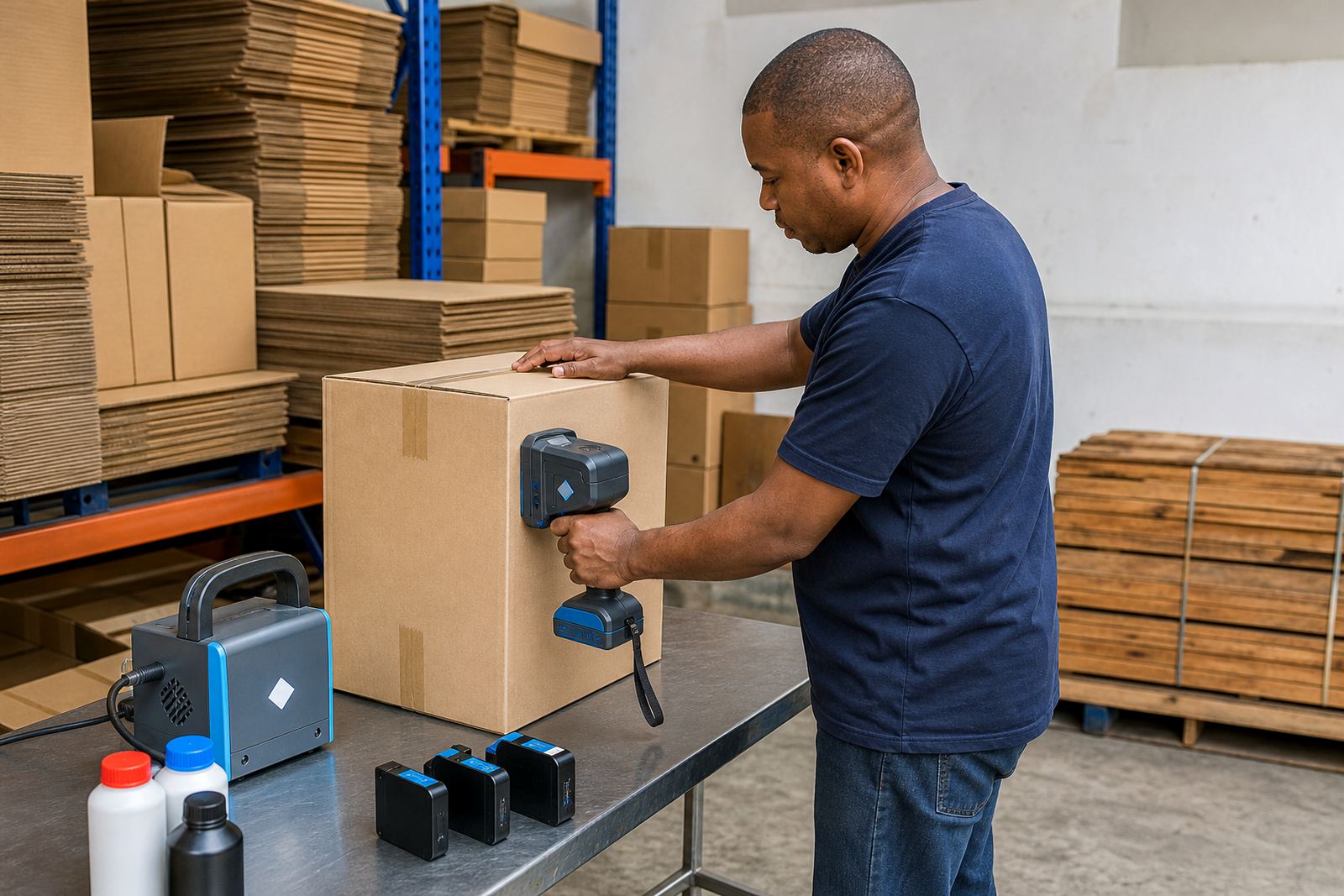
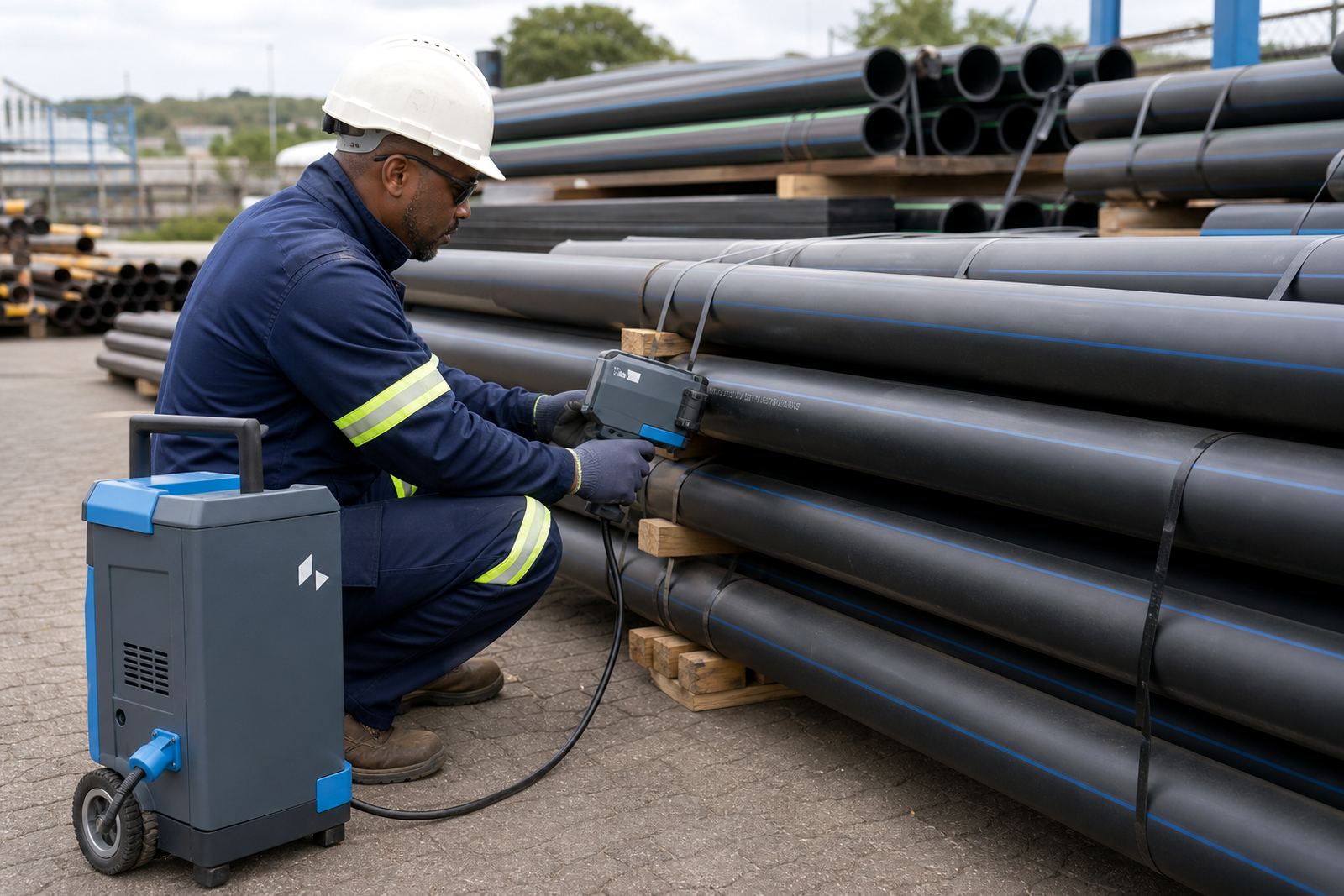
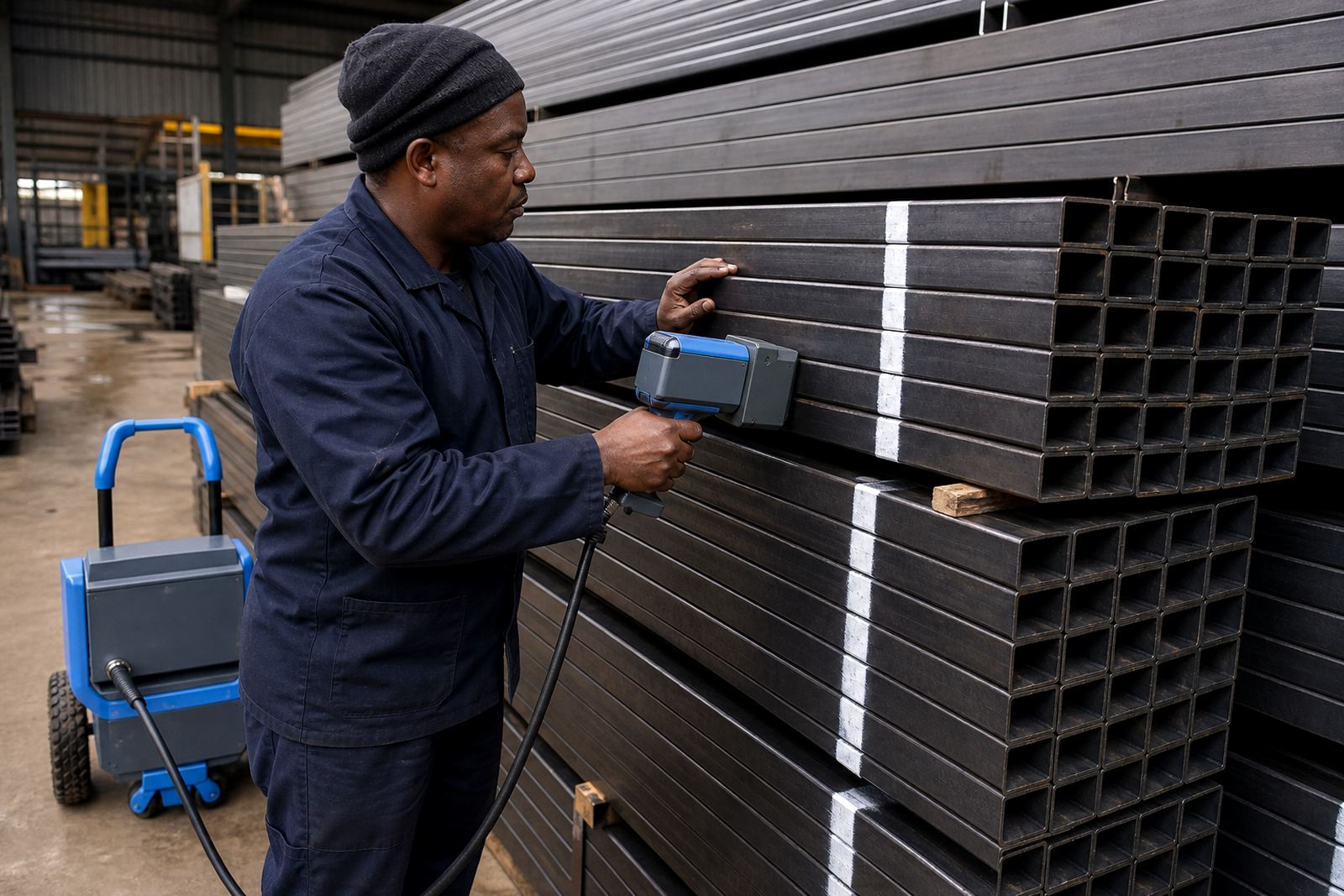
Our team set the job up around a handheld inkjet coder with a fine print head and quick-dry solvent ink. That combination suits painted metal when the surface is clean, dry and free of heavy oil. It also gives the operator enough control for short runs, where one pallet may need a different code from the next.
The client wanted a practical setup, not a complicated printing process. We kept the message layout plain, used a readable print height and loaded the text so the operator could work in a steady rhythm.
What had to be right on the shop floor
Painted steel brings a few real constraints. Fresh paint can still hold solvent vapour, and that can affect adhesion if coding is attempted too early. Surface texture also matters, because a slick finish needs a different touch than a rougher baked coating.
The site team needed marks that stayed sharp on curved edges and flat sections alike. Some items were stamped, others were laser cut and then painted, so the coding position had to sit clear of weld beads, seams and handling marks. We also had to work around mixed bundle sizes and changing dispatch labels.
- Surface: painted steel with a smooth finish
- Marking: dates, batch codes and a logo
- Ink type: quick-dry solvent ink
- Print height: 12 mm text with a compact logo field
- Use case: dispatch preparation and stock identification
- Hire term: weekly hire with room to extend
Set-up details that made the coding hold
We supplied the handheld printer with the right ink for metal coding and loaded the dispatch message in the format the team wanted. The layout was kept tight so the code sat neatly on the part without crowding nearby weld marks or edge profiles.
Field setup covered nozzle check, print calibration and a short test on sample steel pieces. During that test phase, the operator could see how the mark behaved on the painted surface and adjust hand speed and print position before the first production batch went out. That saved backtracking later, which matters when the yard is already busy.
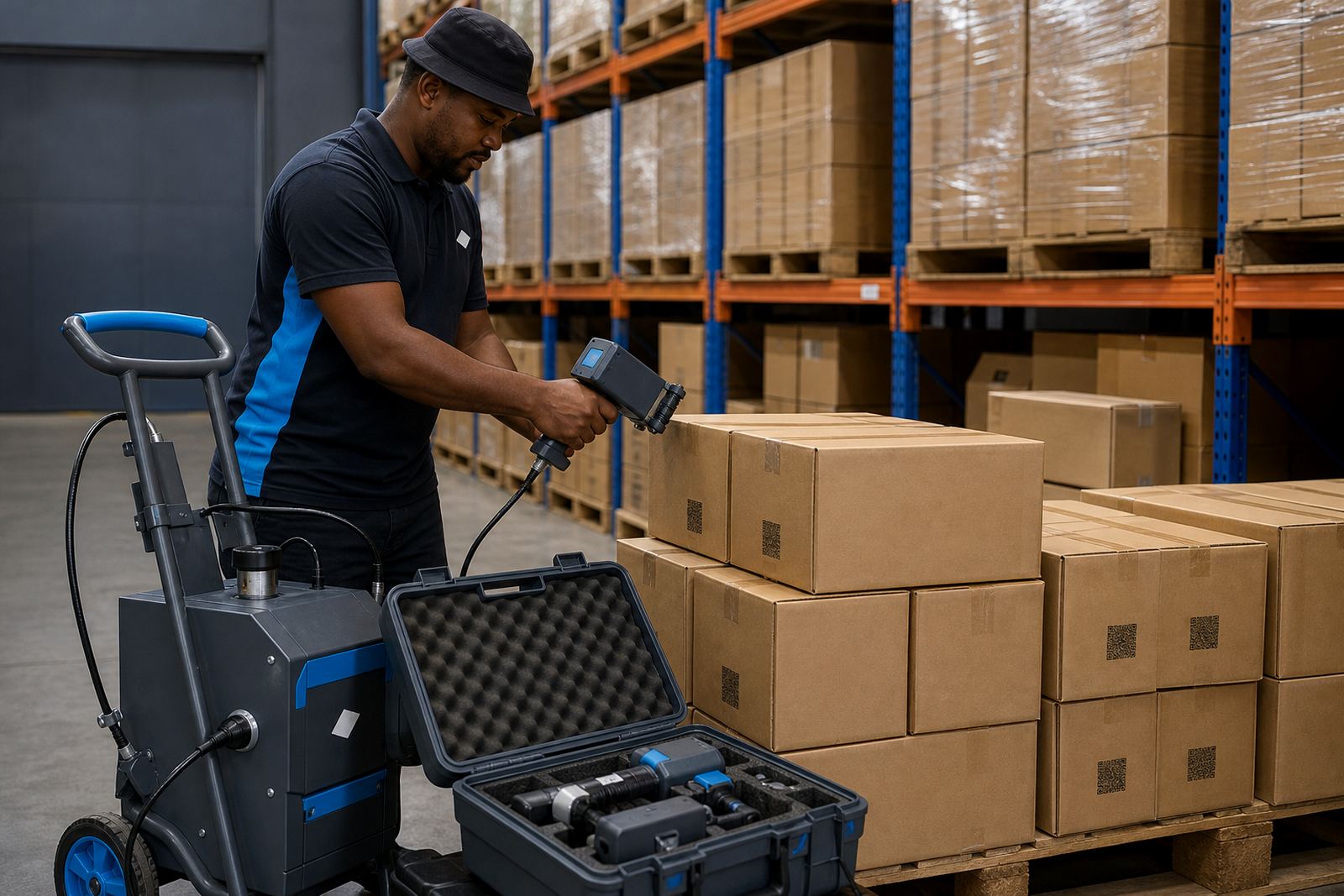
The equipment was also prepared for barcode work if the dispatch team needed it on separate labels or on selected pieces. In this case the main requirement was date and batch coding, but the unit was loaded with barcode support as part of the setup pack.
A two-week hire plan for a moving dispatch schedule
The job ran on a short hire window first, then extended into a longer weekly arrangement once the team saw the ink match the surface properly. That suited the pace of the dispatch area, where one week can be light and the next can fill up quickly with outgoing steel stock.
Because the client was based in Germiston and shifting stock through more than one packing point, we kept collection and handover planning straightforward. The printer stayed on site while production and despatch were active, and backup support was available if a unit needed replacing during the hire period.
- Week 1: setup, message loading and test prints
- Week 2: live coding on painted stock and fine tuning
- Extension: ongoing weekly hire for dispatch runs
- Support: consumables and backup unit cover if required
What the crew handled on site and from the Pinetown base
Handheld Printers Rental handled the practical parts of the hire from our Pinetown, Durban base. The work included delivery and collection, on-site setup help, remote setup guidance when needed, operator training and trouble-checking if the print image needed adjusting.
The team on this project drew on several parts of the hire service. Nokuthula Kotze managed the hire coordination, Jared Rademeyer handled technical checks, Anele Vermaak took the operator through the printer use, Priya Pillay kept the hire admin moving, and Morne Oosthuizen assisted with field setup. Sibusiso Moagi oversaw the rental side and kept the job aligned with the brief.
The client also had access to ink selection help, message loading, logo setup and consumables supply. That meant the job could move from sample marking to production marking without hunting for extra parts in the middle of dispatch.
Outcome on the steel line
The final marks were clean, readable and quick to dry on the painted steel. Codes stayed visible through handling, bundling and pallet movement, which helped the dispatch team keep product identification in order before loading.
The client needed consistency more than anything else. Once the print height, ink and message layout were settled, the operator could move from one part to the next without reworking the setup. That kept the job practical and suited to short production windows.
If a similar steel job lands on our side again, we would run it the same way: check the coating, test the ink on sample pieces, load a compact message and leave space for a backup unit if the dispatch period is tight. That approach fits painted metal, especially where parts move fast and the codes must stay legible.
Key facts
| Project town | Germiston |
|---|---|
| Material coded | Painted steel items |
| Mark type | Dates, batch numbers and logo |
| Printer type | Handheld inkjet coder |
| Ink used | Quick-dry solvent ink |
| Print height | 12 mm code height, with compact logo placement |