
Compact coding for small runs and quick line changes
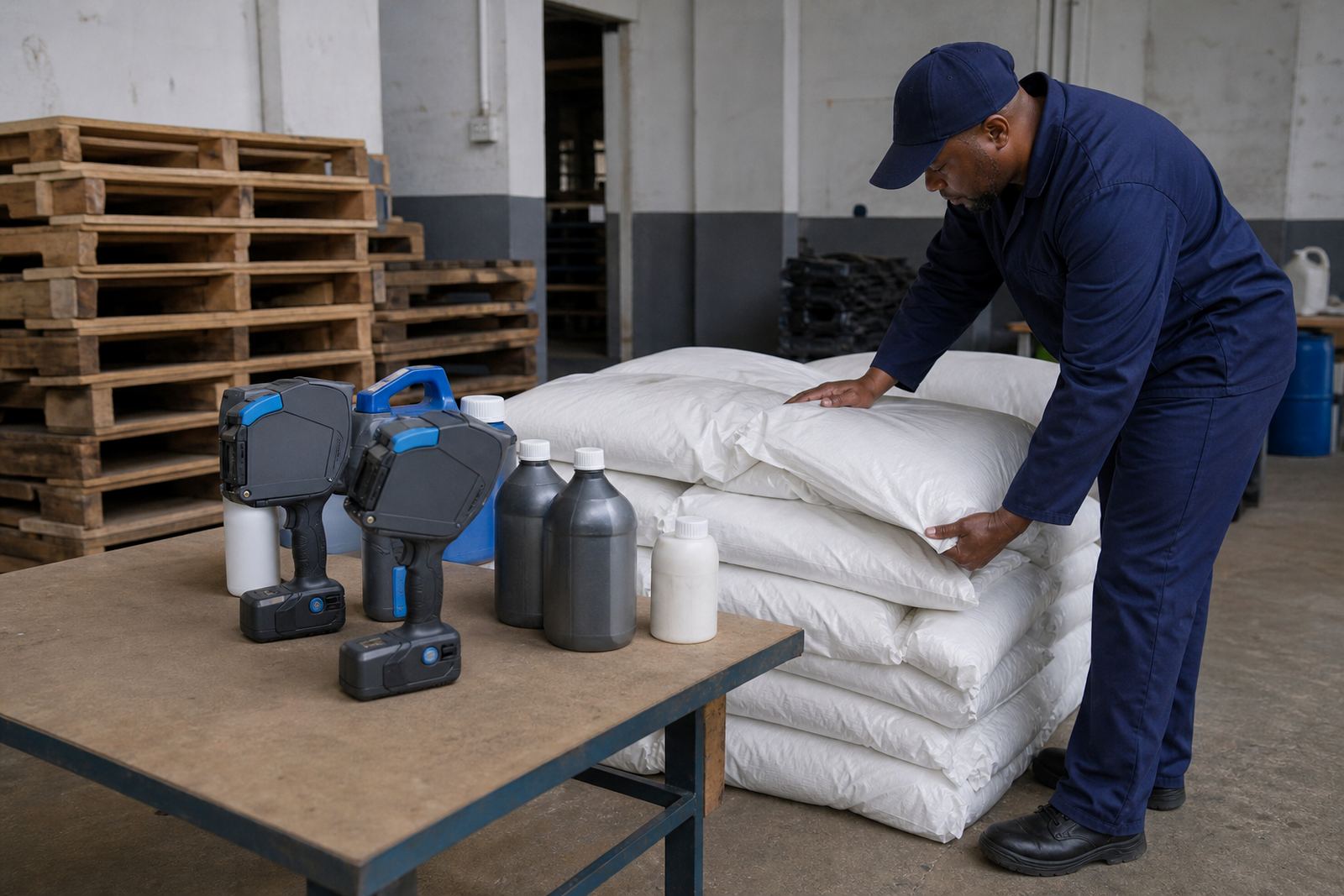
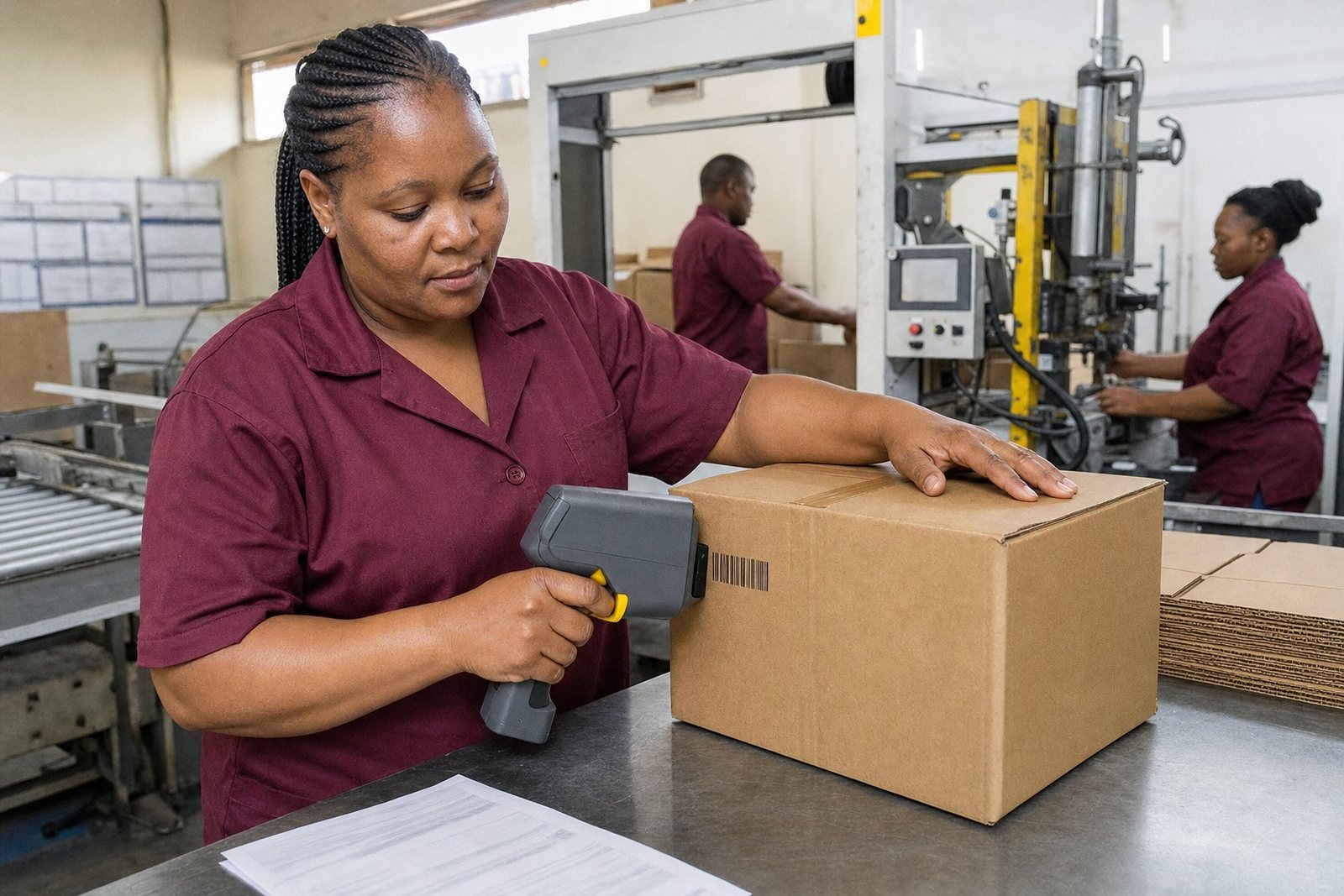
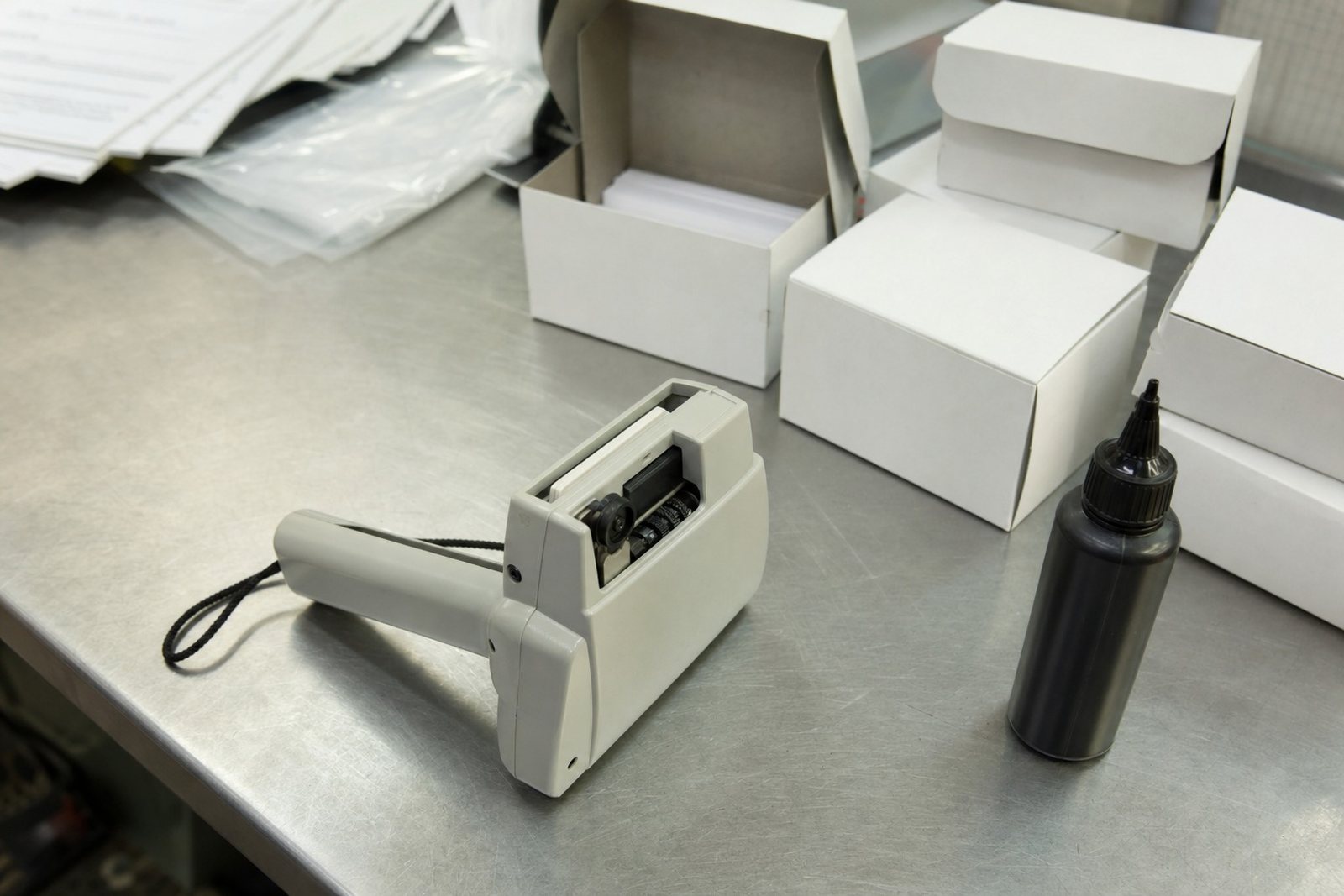
The mini date coder is built for straightforward marking where the print content stays short and the job changes often. It is used for dates, batch numbers, simple text and small logos on cartons, woven bags, timber packs, pipes and coated steel. The body is light enough to move between benches, packing lines and yard work, while the print head keeps the code close to the surface for a clean mark.
On site, this type of unit is often chosen where a larger coding machine would be awkward. It works well for hand-held marking on packed stock, loose lengths and items that are already stacked. The print area is compact, so the message must be planned properly before loading. That suits smaller production runs, contract packing and workshop work where the same wording repeats across many items.
For Durban and Pinetown conditions, the unit can be paired with the right ink for the surface and the level of handling after printing. If the code needs to hold up against scuffing, damp air or handling in transit, the ink choice matters as much as the coder itself.
Print height, message length and surface fit
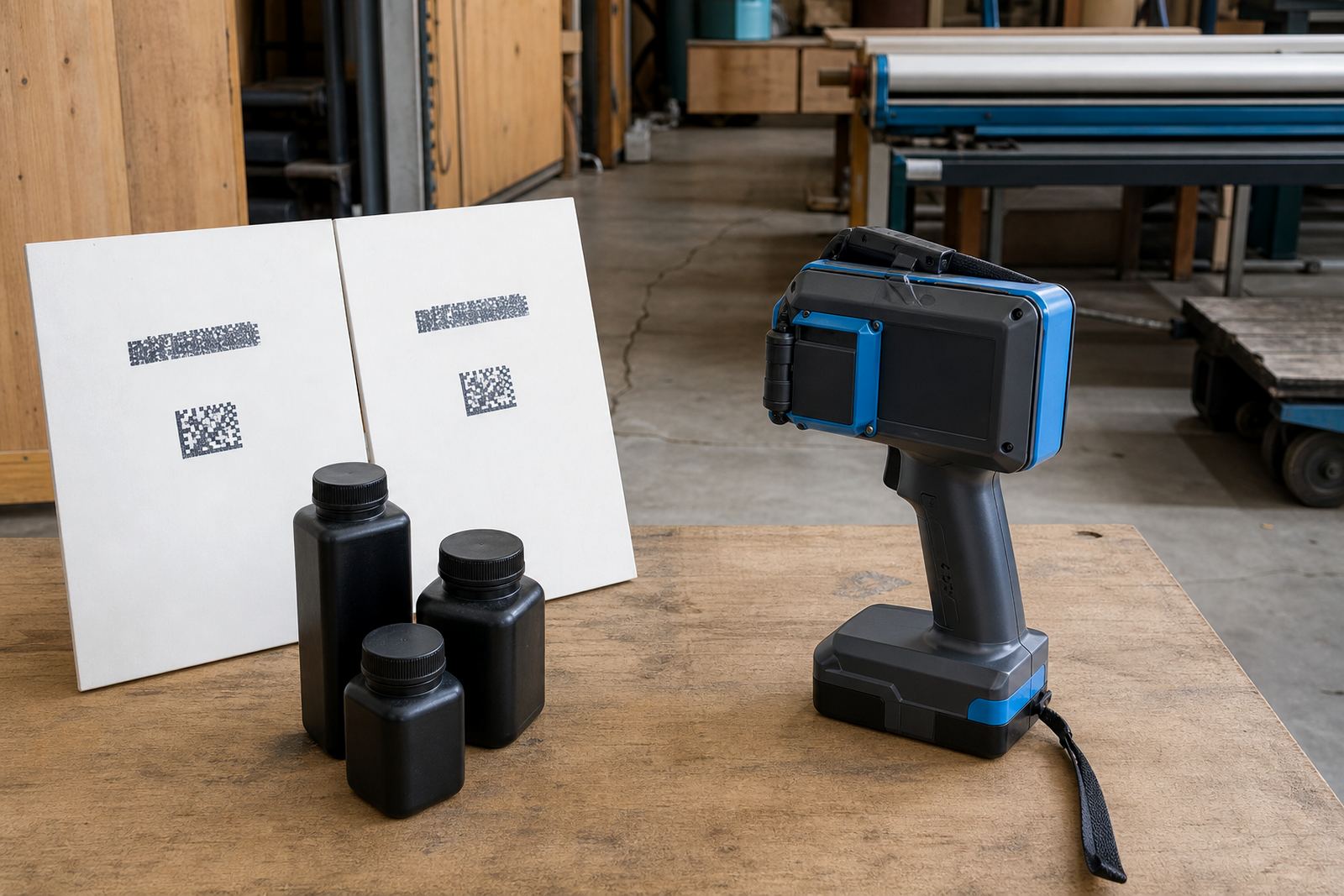
The mini date coder is usually set up for small print heights, commonly around 12 mm to 25 mm depending on the message and the surface finish. Shorter messages print cleaner on uneven materials, while longer strings need more spacing and a steadier hand. A neat code on a flat carton face is easier to read than the same code on a curved pipe or rough timber edge.
- Date format, batch code and shift code can be loaded together when the print area allows it.
- Simple logos can be added where the artwork is basic and the surface is even enough.
- Text size is adjusted to suit the item width and the reading distance.
- Porous and non-porous surfaces need different ink choices for better hold.
For timber, the grain can break up small lettering if the message is too fine. On pipes and coated steel, the surface sheen can slow drying unless the ink is matched properly. Cartons and bags give more room for compact coding, especially where the product line is moving fast through packing and dispatch.
Ink choices for cartons, timber, pipes and steel
The mini date coder is usually rented with ink matched to the job. Solvent-based ink is often used for non-porous surfaces such as coated steel, plastic film and smooth pipe sections. Water-based ink suits absorbent materials like cartons, paper sacks and untreated timber where the mark can sink in and dry neatly. Quick-dry ink helps where handling starts soon after marking, especially on mixed stock or jobs with tighter packing flow.
Ink choice affects more than colour. It changes how fast the mark dries, how well it sits on the surface and how much rubbing it can take during stacking or transport. In humid coastal air around Durban and Richards Bay, drying behaviour can shift a bit, so the right formula matters. On dusty timber yards or packaging floors, a cleaner surface before marking improves the final result.
- Solvent ink for smooth, sealed and non-porous materials.
- Water-based ink for cartons, paper sacks and untreated timber.
- Quick-dry ink for faster handling after marking.
- Black is the most common choice, though other colours may suit the brief.
Hire terms that suit short jobs and repeat work
This coder is available on weekly and monthly hire, which suits short production runs, contract work and ongoing coding needs that do not justify a full purchase. The hire can include the unit, ink selection help, message loading and test printing before the job starts. Where the marking location changes, the same unit can move between packing areas, yard stock and dispatch points.
Delivery and collection can be arranged for Pinetown, Durban, Pietermaritzburg, Johannesburg, Cape Town and Richards Bay, with coverage through the wider South African route network. For teams in Westmead and New Germany, the same hiring process applies when the work is local and the stock is moving between sites. Backup unit support is available where a job cannot pause for a fault.
- Weekly hire for short campaigns or trial runs.
- Monthly hire for repeat marking and steady output.
- Delivery and collection for local and out of town jobs.
- Backup unit support for production-critical work.
Setup on site and operator handling
The mini date coder is simple to place into service, but the setup still needs care. Message loading, barcode setup and logo setup must be checked before the first run so the code sits in the right position and reads clearly. On-site setup is useful where the team needs hands-on guidance with the first batch, especially when the surface, ink and wording all have to work together.
Remote setup help can be used for follow-up support on repeat jobs or when a unit moves to another branch. Operator training covers the basics of hand movement, spacing, print angle and surface contact. A steady stroke gives better results than a rushed pass, and test printing helps catch spacing issues before stock is marked in volume.
Where a job uses barcodes, the code must be loaded at the correct size and tested against the scanner used at dispatch or receiving. For logo marking, the artwork needs to be simple enough for the print head and the surface must be clean. Small slips in alignment can happen on curved items, so a first test piece is worth doing before production starts in earnest.
Checking care points before hire
Care is mostly about keeping the print head clean, sealing ink properly and protecting the unit during transport. After a session, the nozzle area should be wiped according to the ink type used, then the unit stored where dust and direct sun will not dry residue into the head. In yards with timber dust or in packing rooms with loose fibre, a covered storage spot helps the coder stay consistent.
Before the hire is set up, it helps to confirm the surface type, the code format, the print height, the number of lines, the colour needed and whether barcodes or logos are part of the message. It also helps to know the average stock size and the handling that follows marking, because that affects ink choice and drying time. If the items are curved, rough or very smooth, the coder and ink need to suit that finish from the start.
- Surface type: carton, bag, timber, pipe or steel.
- Message details: date format, batch number, logo or barcode.
- Print height and number of lines needed.
- Ink type, colour and drying behaviour required.
- Hire period and delivery location.
For teams working across Durban, Johannesburg or Cape Town, the same basic details help keep the hire accurate. The best results usually come from matching the coder, the ink and the material before the first mark is made.
Key facts
| Product type | Mini handheld inkjet date coder |
|---|---|
| Typical print height | About 12 mm to 25 mm depending on message and surface |
| Marking use | Dates, batch numbers, short text, simple logos and barcodes |
| Suitable surfaces | Cartons, bags, timber, pipes and coated steel |
| Hire terms | Weekly and monthly |
| Support included | Ink selection help, setup, training, test printing and troubleshooting support |