
Coloured ink for marks that need to stand out
Red ink is used when black is too plain or when a visible handling code needs to be picked up fast on packing lines, stores and dispatch areas. On cartons, timber packs, pipes, drums and coated steel, the colour gives better contrast for short text, batch references and simple symbols.
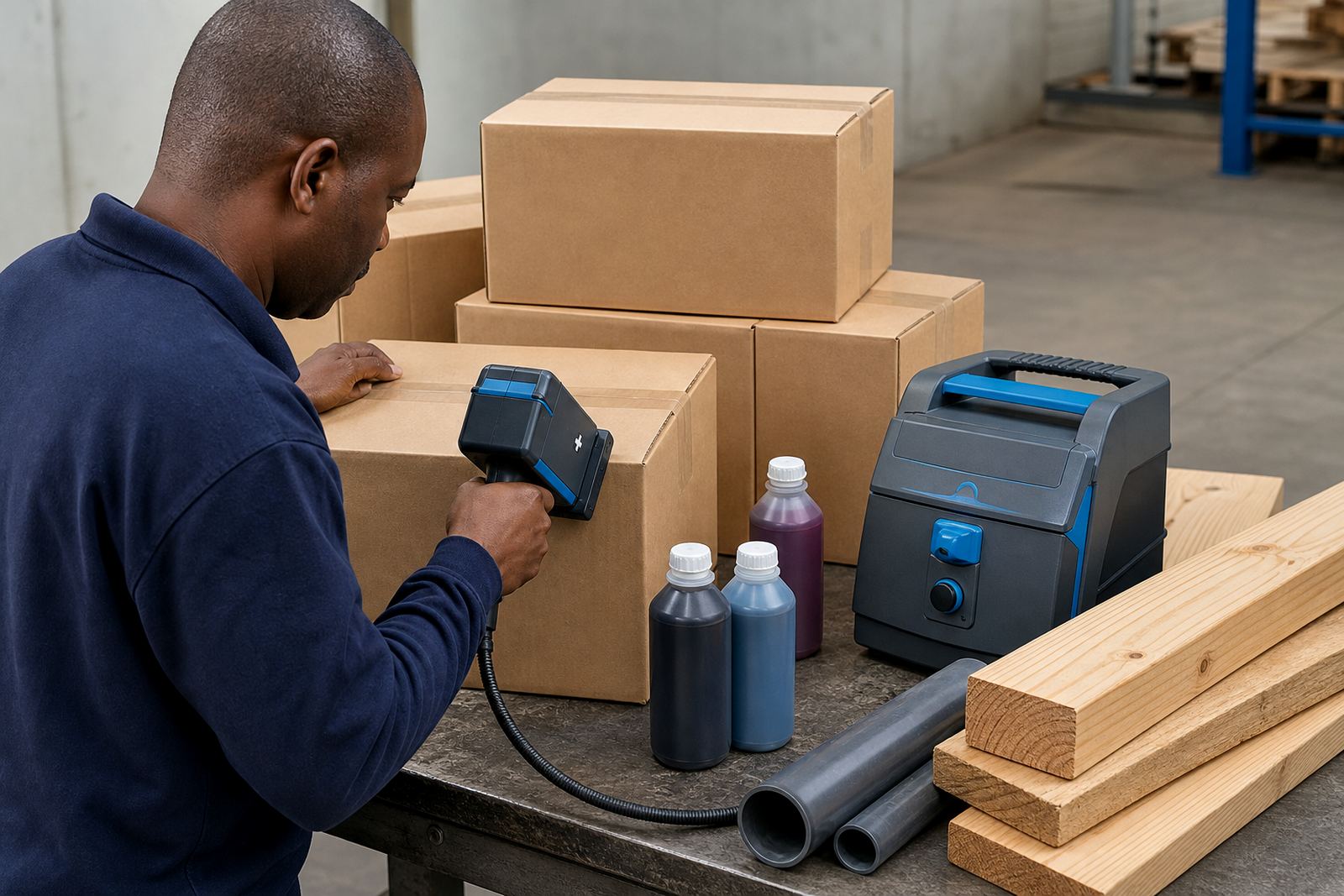
For handheld inkjet printers, the ink choice has to match the surface and the job. Some red inks are made for porous stock such as corrugated carton and untreated timber. Others are made for smoother surfaces such as painted steel, plastic pipe or sealed board, where dry time and adhesion matter more. The right mix helps the mark stay readable without smudging when items are moved, stacked or wrapped.
We supply red ink for selected coding work where the print needs to be visible from a distance, or where a site wants colour-coded identification across lines and stores. In many cases the same handheld coder can carry red ink for one run and another cartridge or bottle for a different mark set, depending on the machine and the substrate.
Ink types and print heights to match the job
Red ink is available in solvent-based, water-based and quick-dry options, each chosen for a different surface and handling pace. Solvent inks are commonly used on non-porous and semi-porous materials where faster surface grip is needed. Water-based inks suit absorbent materials and cleaner indoor marking. Quick-dry red ink is useful where cartons are moved soon after coding and the print needs to settle with less waiting on the line.
Handheld inkjet coders usually print in a range of character heights, often from small date marks around 12 mm up to larger visible text of 25 mm or more, depending on the unit and the nozzle set. That matters when the red ink is used for logos, shift codes, pallet notes or bold handling text on outer packaging. Larger print widths can be built up with multiple passes, but the surface should be stable and the hand movement steady.
- Single-line date and batch marks for cartons and bags
- Two or three-line handling codes on pipe bundles
- Visible identification on timber packs and steel sections
- Simple logos or symbols where colour helps recognition
Where red ink works well on South African sites
Red ink is often selected for warehouses, timber yards, packing sheds, fabrication stores and export staging areas where a mark has to be seen quickly. In Durban and Richards Bay, humidity can affect drying on some surfaces, so ink type should be matched to the material and handling speed. On Cape Town and Johannesburg jobs, the same red ink may be used differently because the surface mix changes from site to site.
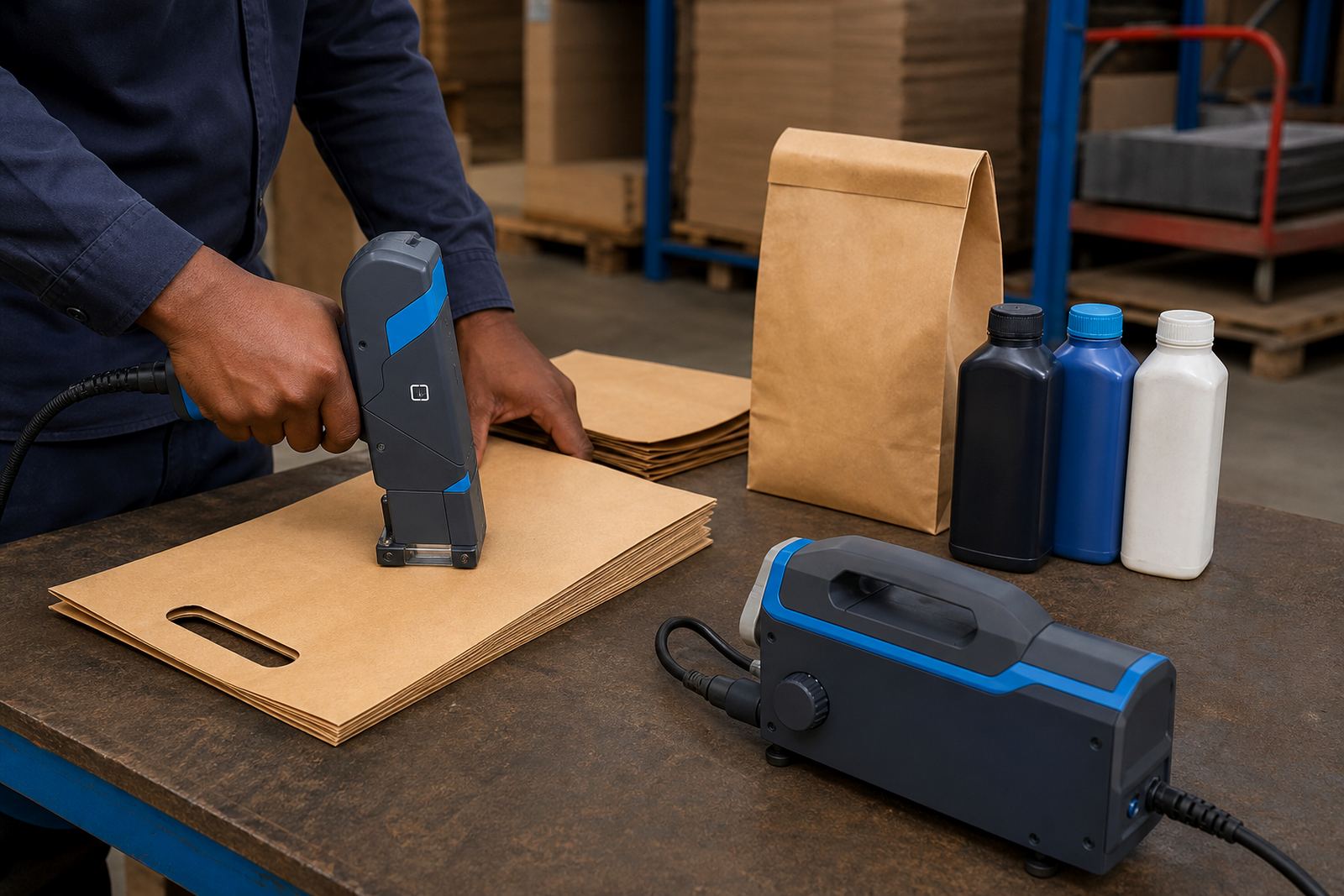
This supply is suitable for batch identification on cartons, handling notes on poly bags, section marks on timber, and code marks on pipe bundles before wrapping or dispatch. It is also used where a client wants to separate one product line from another with a colour cue. If the mark must sit on a glossy or coated surface, the substrate needs to be checked before the cartridge or bottle is loaded into the handheld printer.
For uneven timber grain, a slightly heavier deposit can help the mark show through the surface texture. On smoother pipes and coated panels, a finer spray pattern may give a cleaner edge. That balance is part of the selection process, because red ink is not just about colour, it is also about how the mark dries and stays readable in handling.
Fitting and loading into handheld coders
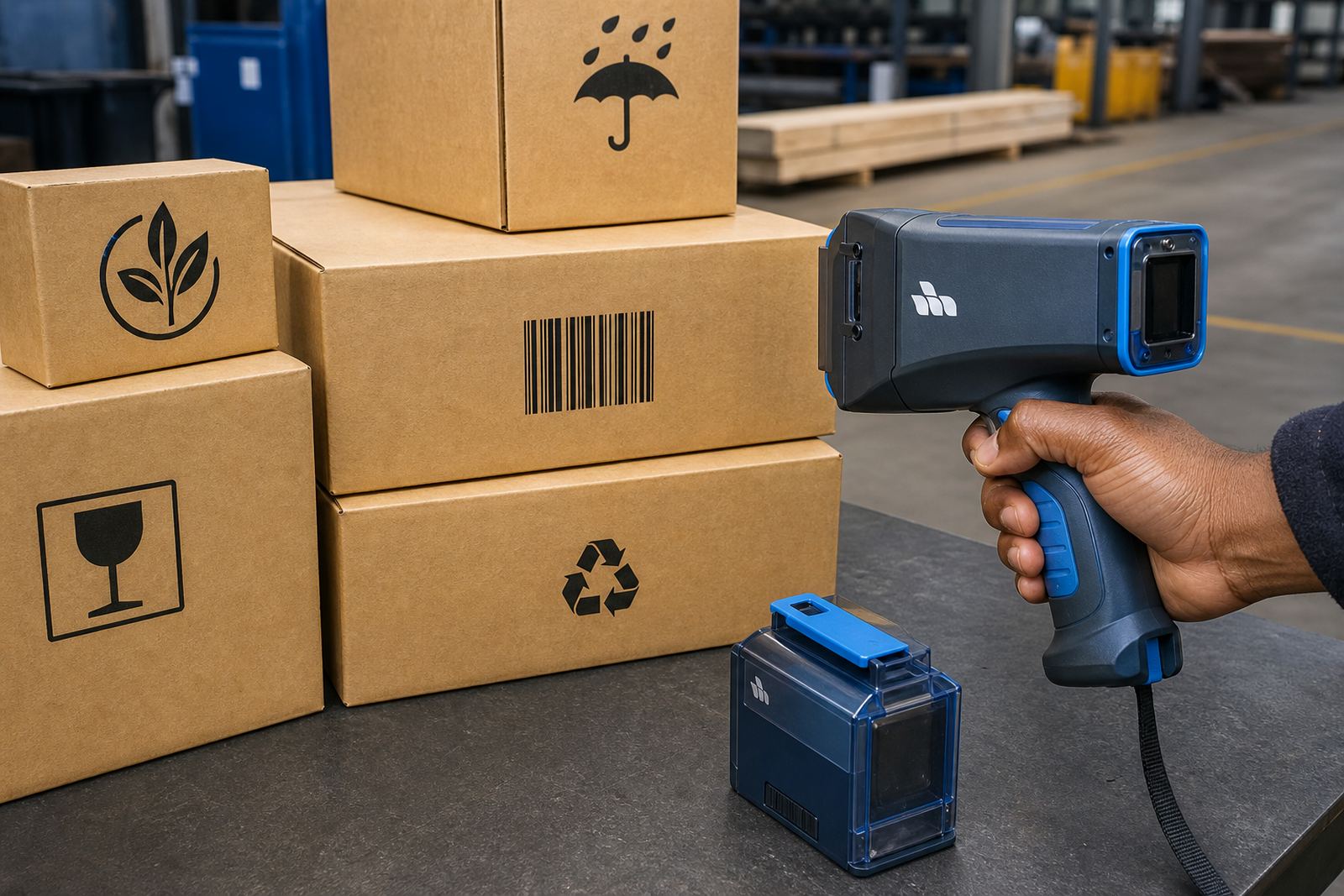
Red ink is loaded into a compatible handheld printer cartridge or refill system, depending on the coder in use. The unit must be checked for nozzle condition, printhead alignment and the correct ink path before the first mark is made. Some machines need a short priming step after fitting, especially if the printer has stood idle or if the cartridge has been changed over from another colour.
The loading process also needs the right message settings. Date fields, batch numbers, barcode size and logo placement all affect how the red ink lands on the surface. If the printer is being used on a warehouse floor or in a dispatch bay, the operator should test the print on the actual stock, not only on a spare sheet. That helps with print height, density and edge sharpness.
- Check surface type before loading the ink
- Prime the cartridge or nozzle set if needed
- Run a test print on the same stock
- Confirm line height, density and drying behaviour
- Keep the printhead clean between runs
Care, storage and handling between jobs
Red ink lasts better when cartridges, bottles and capped parts are stored upright in a cool, shaded place. Heat can thicken some formulas, while dust can affect the printhead and nozzle flow. On sites near the coast, moisture control matters too, especially where the printer is kept in a store room that opens often during the day.
After use, the outer surfaces should be wiped down and the cap fitted properly so the nozzles do not dry out. If a machine is moved between Pinetown, Pietermaritzburg or another branch hire point, it should be packed so the ink does not shift or leak. Any unused ink needs the cap back on tightly, with the label kept visible for colour and formulation checks.
Care is also about using the right red ink for the job rather than forcing one formula across every surface. A neat print on carton may behave differently on treated timber or powder-coated steel. That is why the surface, drying time and print contrast should all be considered together before the order is loaded into the machine.
Details to confirm before red ink is issued
When ordering red ink for a handheld printer hire, the main details are the surface, the mark size and the handling pace. A carton mark for warehouse packing is not the same as a pipe code on a coated bundle, and a timber yard may need more visible density than a bagging line. The selected formula should also suit the ink system in the coder, whether it uses cartridges, refill bottles or another compatible feed setup.
It helps to confirm the print content, especially where the job includes dates, batch numbers, logos or a barcode. The width and height of the mark will influence the ink load and the way the printer is held during the pass. If the surface is oily, dusty or slightly damp, that should be mentioned before the supply is prepared, because the red shade may perform differently on each substrate.
- Surface type: carton, timber, pipe, steel or bag
- Ink system: cartridge, refill bottle or compatible feed
- Print height and width needed for the mark
- Drying requirement and handling pace after printing
- Colour use: warning code, identification mark or logo
- Site location for hire, delivery or collection
Key facts
| Product | Red ink supply for handheld inkjet printers |
|---|---|
| Ink types | Solvent-based, water-based, quick-dry |
| Common surfaces | Cartons, bags, timber, pipes, steel |
| Typical print height | About 12 mm to 25 mm and larger on suitable units |
| Use cases | Dates, batch codes, handling marks, logos, barcodes |
| Hire terms | Weekly or monthly rental across South Africa |