
Battery kit set-up for mobile coding runs
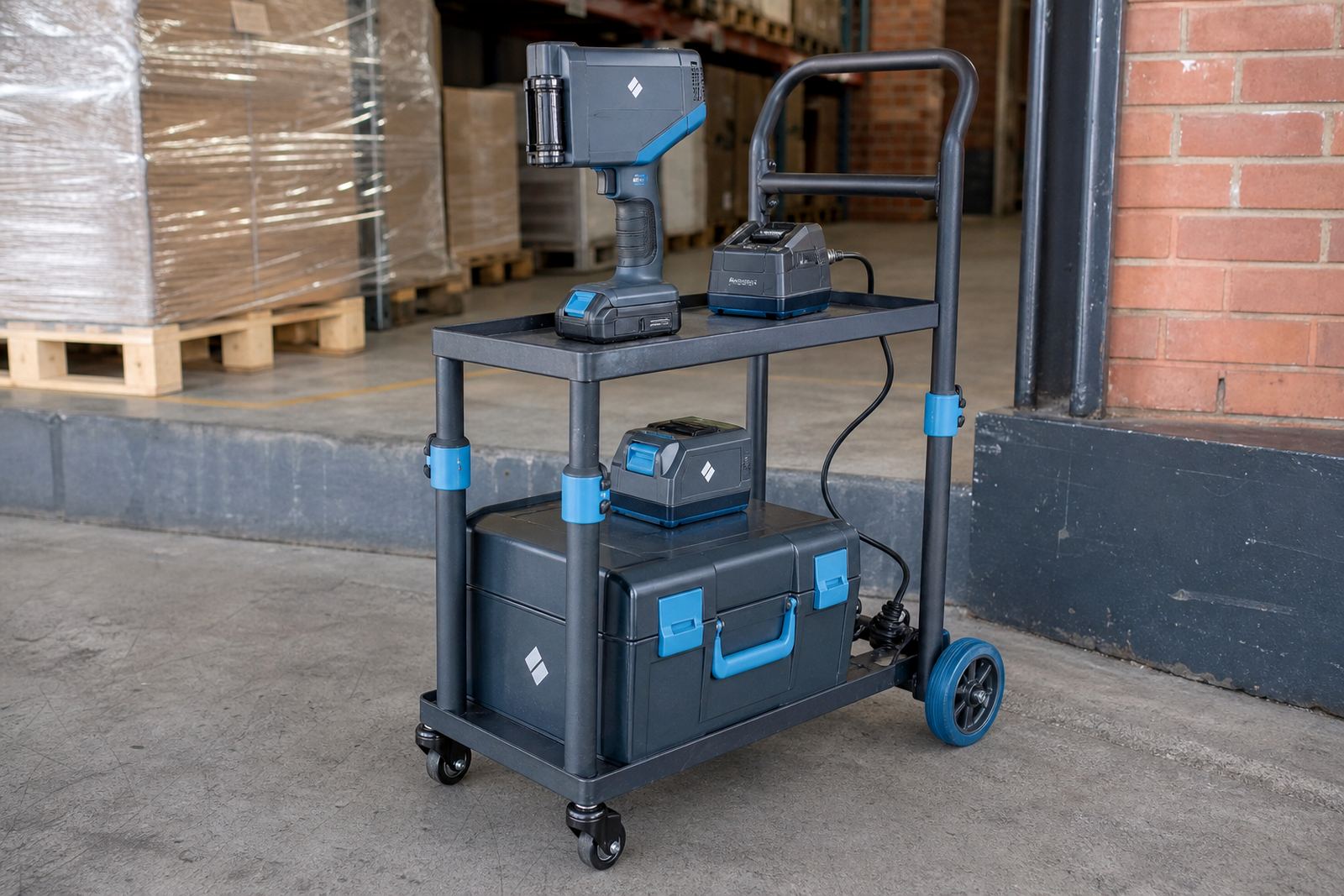
This hire item supplies the power side of a handheld coding job when the printer needs to move with the operator. The kit is built around a rechargeable battery pack, charger and the matching cable set, with carry handling that suits site work between packing lines, stores and dispatch areas. It is used with handheld inkjet coders for short runs, rework jobs and marking where fixed benches are not practical.
The kit helps keep the unit balanced in hand, which matters when codes need to sit straight on a carton flap or along a timber face. On pipe work and steel sections, a lighter carry load makes it easier to follow the surface without dragging a long lead through the yard. That is useful on busy Durban and Pinetown sites, and on outwork across Pietermaritzburg, Johannesburg, Cape Town and Richards Bay.
- Rechargeable battery pack for handheld inkjet work
- Charger and lead set for top-up charging between jobs
- Carry arrangement suited to mobile marking tasks
- Matched for printer use with ink cartridges and message setup
Sizes and options that suit the job
Portable battery kits are selected to match the printer model and the length of the shift. Some jobs need a compact pack for light carton coding, while other sites need a higher-capacity unit for steady marking across a full shift or a longer transfer day. The kit supplied must match the printer voltage and connector type, otherwise the unit will not seat or charge correctly.
For regular hire work, the size choice often comes down to runtime, weight and how often the operator will be shifting between pallets, bundles or stillages. In practical terms, the right option should leave enough power for test prints, message checks and the real run, without repeated swapping that interrupts the marking rhythm.
- Compact pack for shorter marking sessions
- Higher-capacity pack for longer mobile runs
- Matched charger for the selected battery format
- Spare unit option for heavier hire schedules
Where the portable kit fits in real work
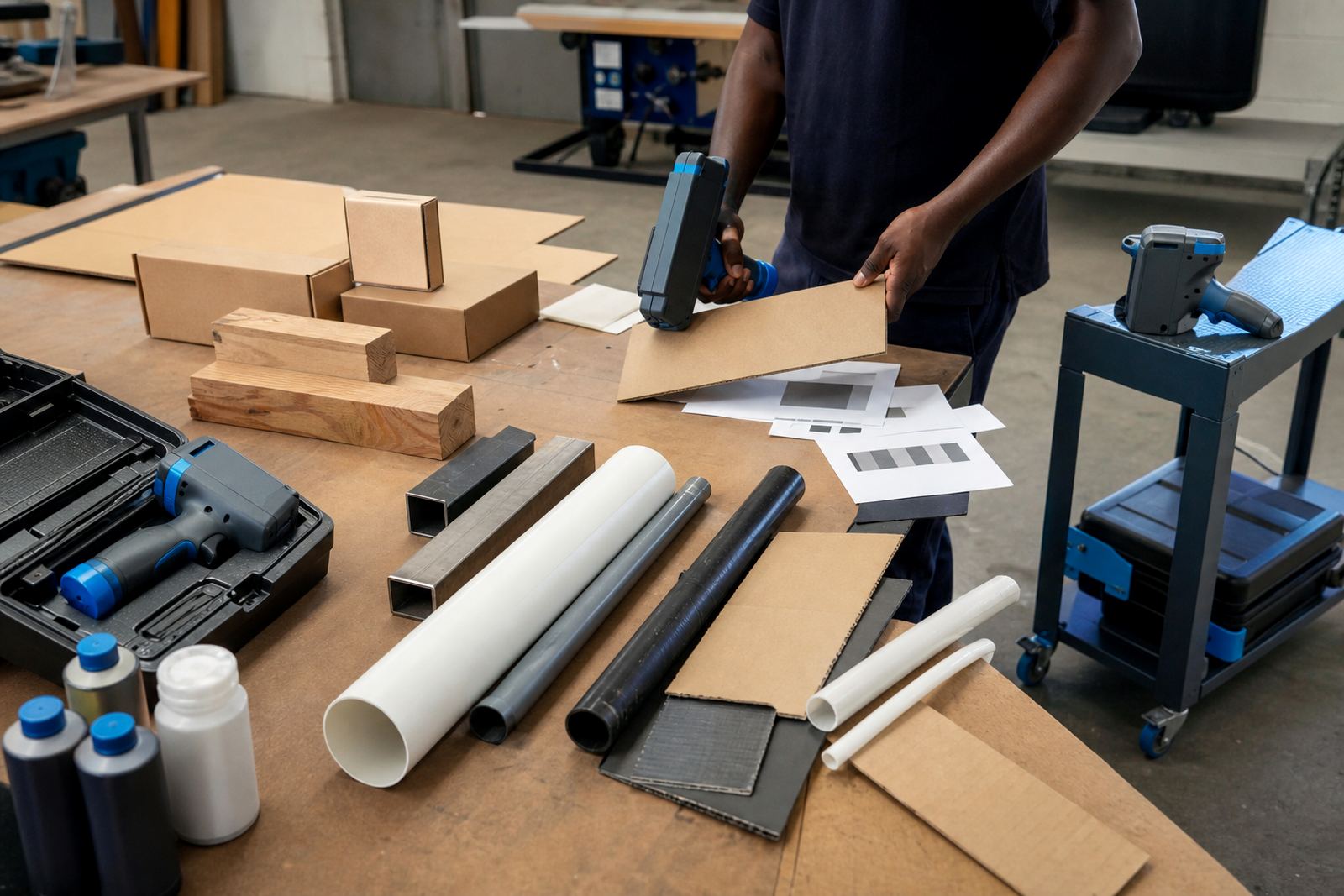
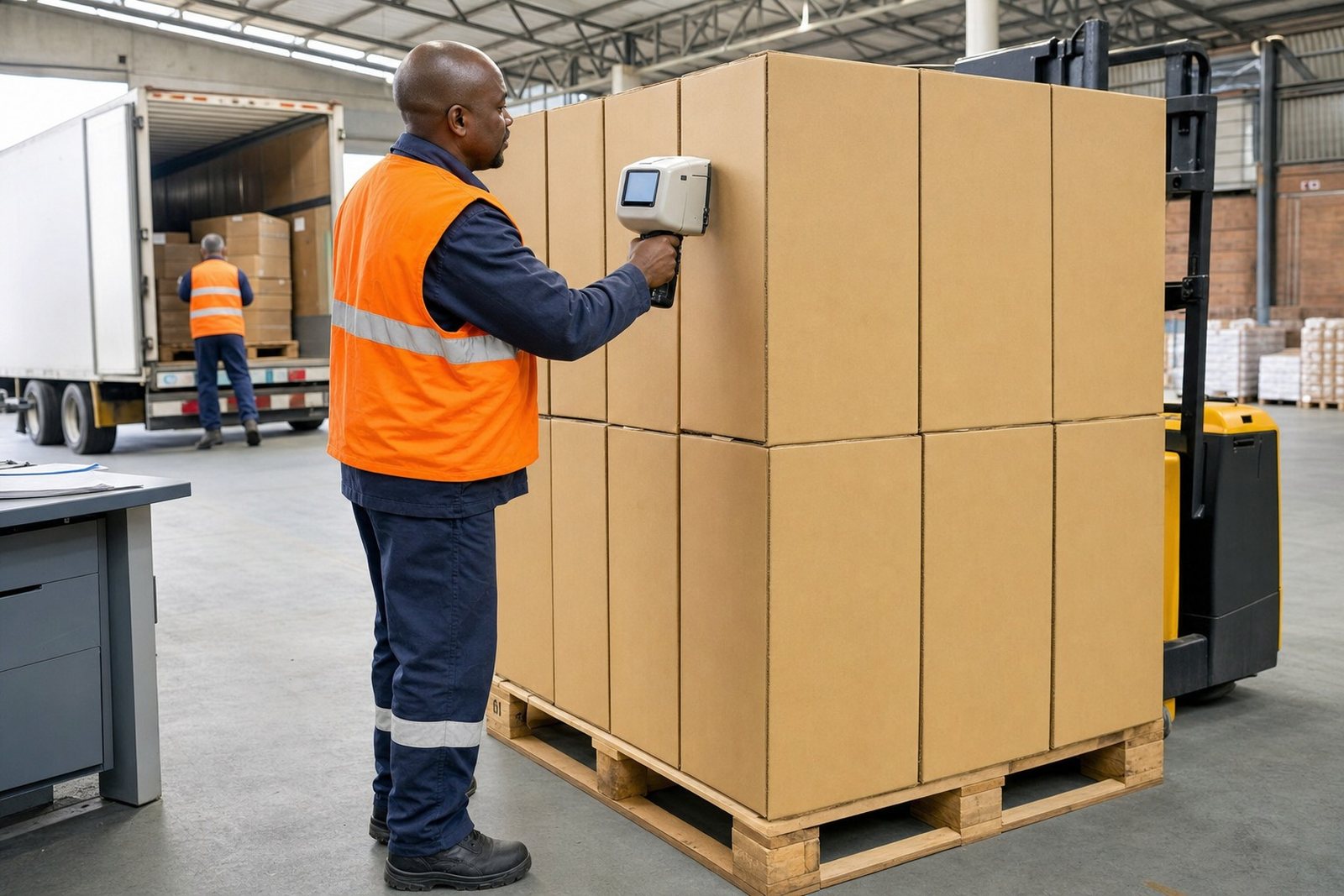
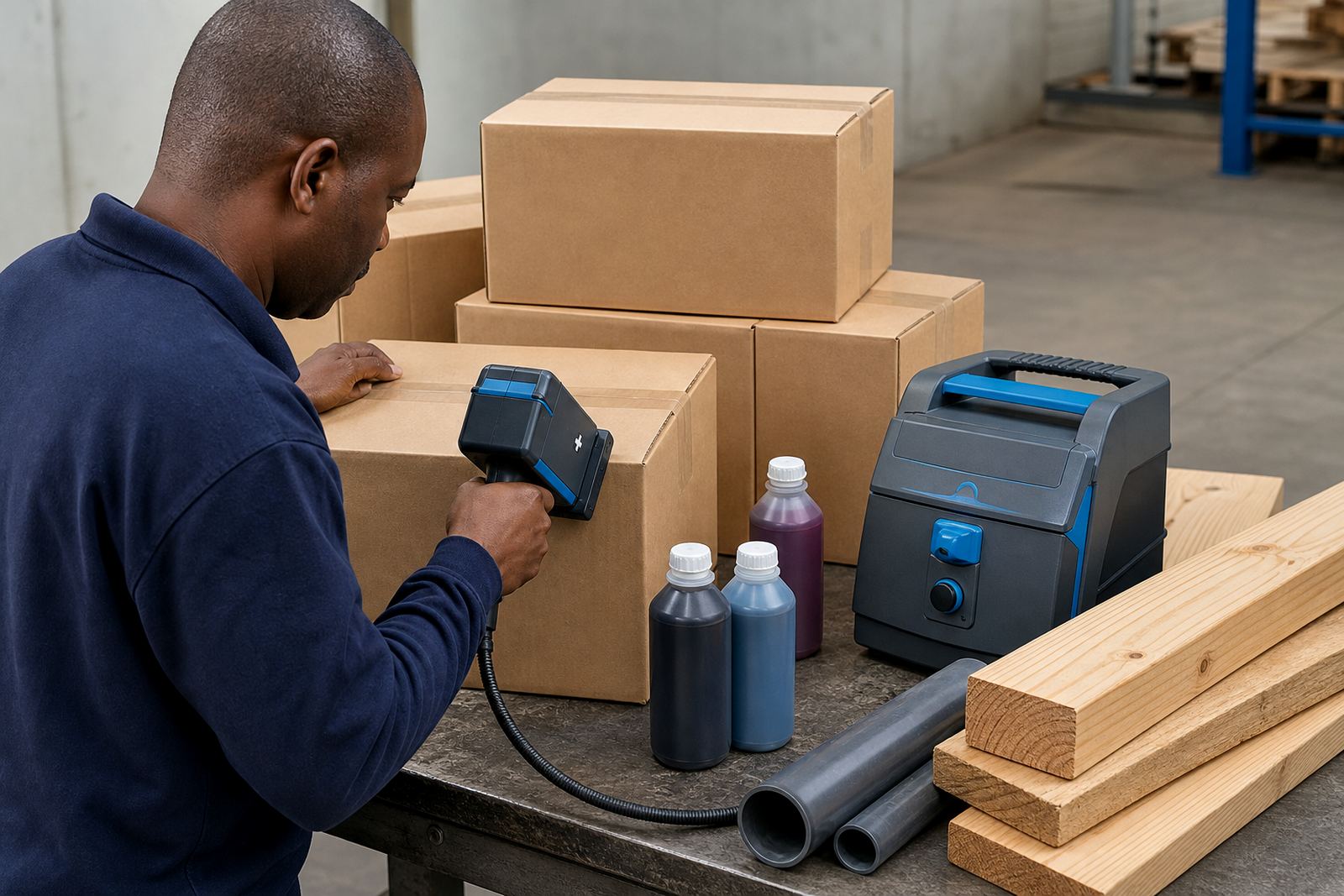
This accessory suits handheld coding on cartons in packing areas, on timber packs at a sawmill, on pipe bundles in a yard and on steel stock moving through dispatch. It is also useful where the team marks in more than one zone during the same shift, such as a receiving bay, a staging area and a loading line. The battery kit keeps the printer portable, which is useful when messages need to be placed close to the item as it moves past.
On outdoor jobs, the kit should be kept dry and clear of dust build-up around the contacts. In coastal work around Durban and Richards Bay, that matters because moisture and salt air can affect the charging points if the kit is left exposed. A clean storage case and regular contact checks help keep the hire item ready for the next run.
- Carton coding in packing and dispatch zones
- Pipe and steel marking in yard conditions
- Timber batches in sawmill and storage areas
- Multi-point mobile work where fixed power is far from the job
Fitting and handover notes before the first print
The portable battery kit must be fitted to the correct handheld printer body, and the cable routing should leave the unit comfortable in the hand. The charger point, lead ends and battery seat need to lock properly before the first message is loaded. If the printer is also being set up for barcode work or logo placement, the battery kit should be checked with the full message file in place so the operator can see how the unit behaves under print load.
Where a job involves repeated moving, the operator should be shown how to check the charge level, seat the pack and store it safely between shifts. Training helps avoid loose fittings, poor charging contact and unnecessary wear on the connector. For a hire job, that handover is usually done with the printer, inks and message setup so the full kit works as one set.
- Check the printer model and battery match
- Confirm charger plug type and lead length
- Test the pack with the planned print messages
- Show the operator how to seat and remove the battery
Care, charging and storage between hire periods
Battery kits last better when they are charged on a stable surface and kept away from wet floors, loose solvent drips and heavy knocks. The contacts should be kept clean, and the pack should not be left loose in a toolbox with metal offcuts. If the kit has been used on a site with dust, wipe the casing before charging so grit does not settle into the connector area.
For weekly or monthly hire terms, the battery should be returned with the charger and leads packed together. A kit that has sat unused for a while may need a check cycle before the next job, especially if it is heading to a run with frequent barcode testing or longer marking sessions. Careful handling keeps the battery ready for the next round of mobile coding.
- Store the pack in a dry case after use
- Keep the charger and lead set together
- Wipe dust and residue from the casing
- Return the full kit with the printer hire item
Ordering details to confirm for the right battery kit
When placing an order, it helps to confirm the printer model, the site location, the expected run length and the type of messages being marked. A carton job with short codes is not the same as a steel marking run with larger characters and repeated test prints. If the work needs solvent, water-based or quick-dry inks, the battery choice should support the full operating pattern, including loading, checks and printing breaks.
We also confirm if the job needs a spare pack, a charger, or a full hire bundle with setup help, message loading and test printing. For work across South Africa, delivery and collection can be arranged for Durban, Pietermaritzburg, Johannesburg, Cape Town and Richards Bay, with on-site setup where the job calls for it. The aim is to send the battery kit that matches the printer, the shift and the surface.
- Printer model and connector type
- Job site and delivery point
- Expected daily marking volume
- Need for spare battery or charger
- Surface type and ink choice for the run
Key facts
| Type | Portable rechargeable battery kit for handheld inkjet coders |
|---|---|
| Use | Mobile coding on cartons, pipes, timber and steel |
| Hire terms | Weekly or monthly rental options |
| Included | Battery pack, charger and matching lead set |
| Fitment | Supplied to match the printer model and connector |
| Support | Setup help, test printing and operator training available |