
A practical handheld coder for everyday marking
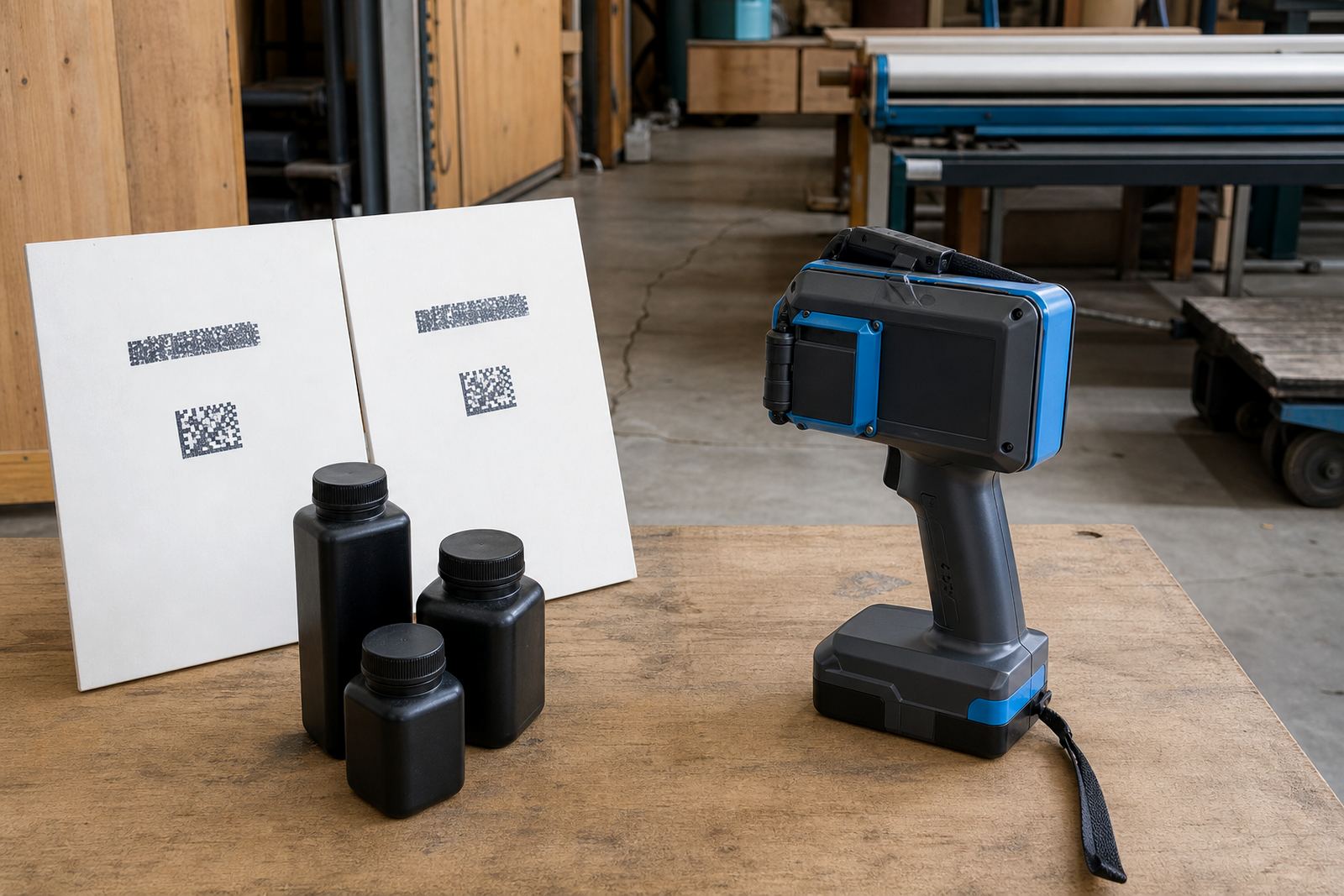
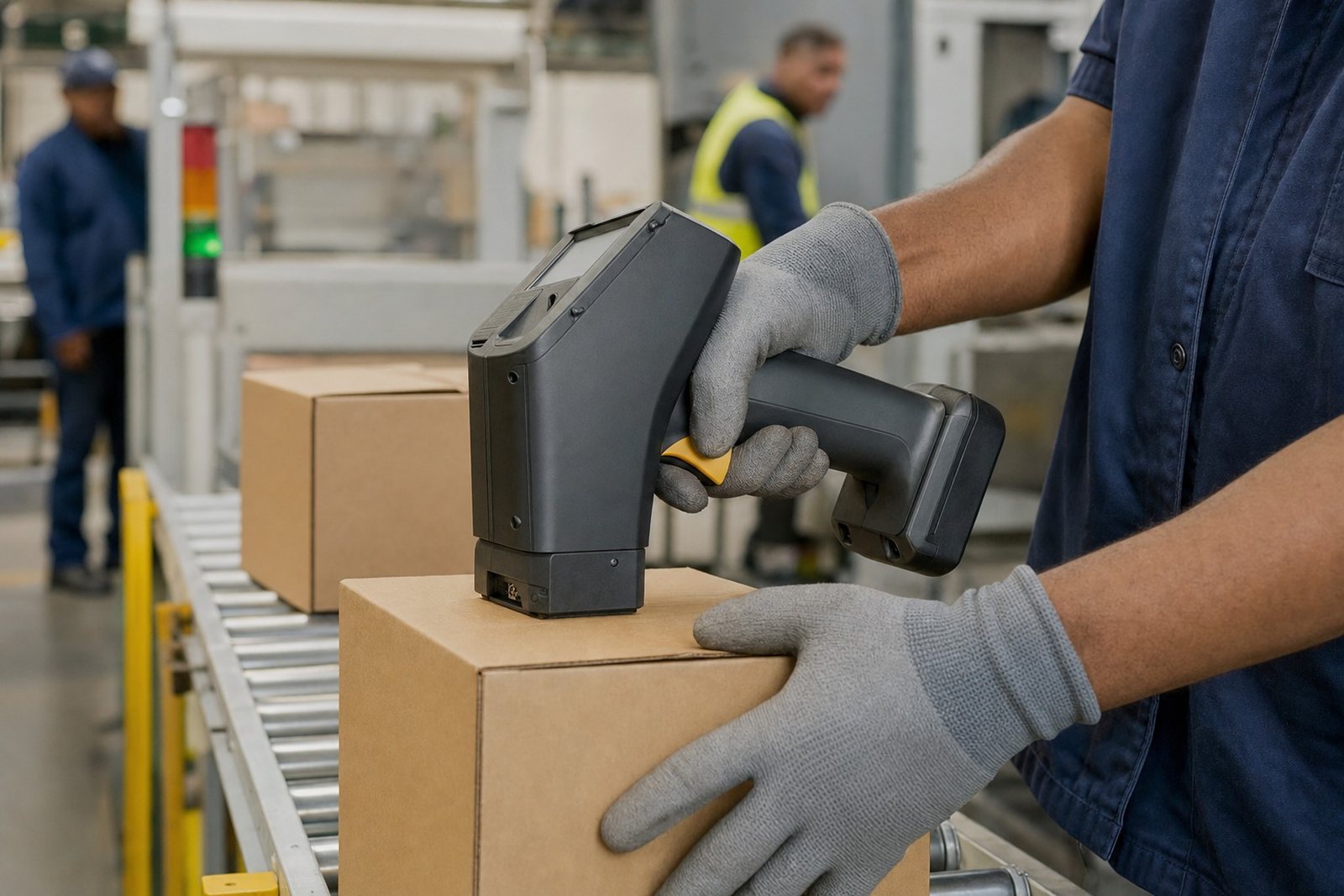
This unit is built for short runs, changeovers and on-site marking where a fixed machine is not the right fit. Operators hold the printer against the surface and trigger the mark, which makes it useful on cartons, woven bags, pipes, timber lengths and steel parts with a fair surface finish. The print head handles small characters cleanly, so dates, shift codes, batch numbers and short product notes stay readable.
For most hire jobs, the question is not only what it prints but how it sits in the hand. The body must be light enough for repeated use, with a stable print head and a screen that is easy to read in a busy packing area. We keep the unit general purpose, with enough control for plain coding and straightforward logo work where the artwork is simple.
- Handheld inkjet coder for date, batch and short text marking
- Suitable for cartons, sacks, timber, pipes and smooth steel
- Portable format for changing work areas and small production batches
- Prints clean codes without setting up a fixed conveyor line
Print height, message area and surface fit
Most standard date coding jobs only need a compact print area. This model is commonly used for print heights in the small to medium range, with one line or a short stacked message depending on the artwork. For cartons and bags, the print can sit clearly enough for warehouse checking and dispatch labels. On timber and pipe, the surface texture matters, so the message needs to be set with the right spacing and ink choice.
When a surface is curved, dusty or slightly porous, the setup changes. The message may need a larger font, a stronger contrast ink or a slower hand movement so the print lands evenly. That is common on treated timber, rough cardboard and painted pipe. In humid coastal conditions around Durban and Richards Bay, ink selection matters because the wrong formula can smudge or dry too slowly on the day.
- Short date lines, batch codes and plain text messages
- Common use on cartons, bags, pipe and timber stock
- Font size and print height chosen to suit the surface
- Barcode and logo loading available where the artwork suits handheld coding
Ink choice for carton, timber and pipe work
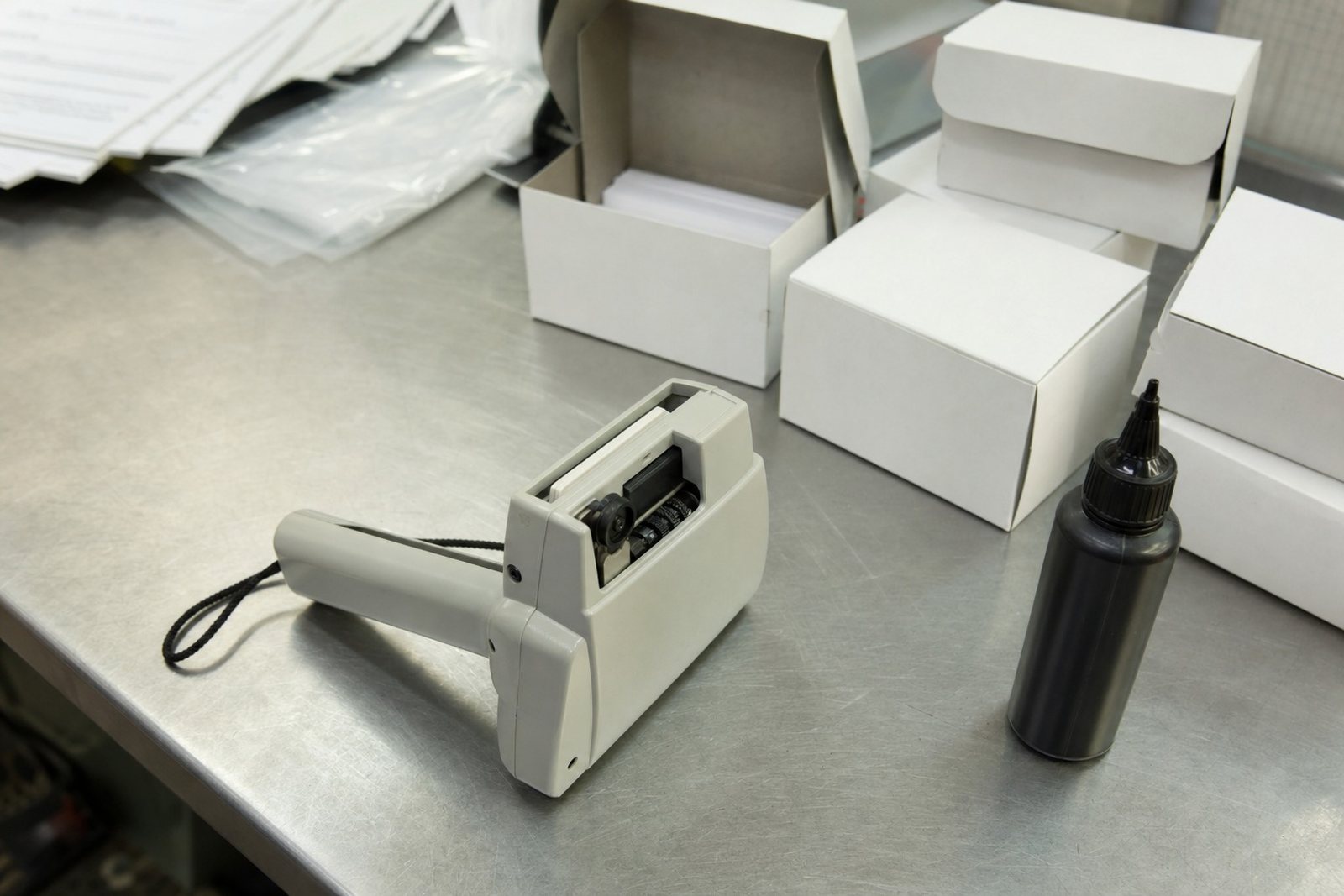
The ink matters as much as the unit. We supply guidance on solvent, water-based and quick-dry inks so the mark matches the material and the handling conditions. Water-based ink is often used on porous cartons and paper-based packs. Solvent ink is better suited to less absorbent or slightly tricky surfaces. Quick-dry options help where the pack moves into stacking or handling soon after marking.
For South African hire jobs, the surface list is usually wider than one site alone. A Pinetown warehouse may need carton coding in the morning and pipe marking by the afternoon, while a job in Johannesburg may need cleaner text for dispatch checks. The printer can be set up for one message or a few stored messages, which helps when batch details change during the week.
- Solvent, water-based and quick-dry ink options
- Ink match depends on absorption, handling and finish
- Useful for cartons, timber, steel and packed goods
- Consumables supply available with the hire
Week or month hire for local and out of town work
This product is hired on weekly or monthly terms, which suits short campaigns, seasonal packing, maintenance shutdowns and projects that move across sites. Businesses in Durban, Pietermaritzburg, Johannesburg, Cape Town and Richards Bay often need a coder only for a defined period, then return it once the run is finished. Where the job is larger, backup unit support can be useful so work does not stall if one unit is being cleaned or checked.
Delivery and collection can be arranged, and on-site setup is often preferred for the first run. Remote setup help is also available where a local team needs to take over after delivery. The aim is to get the message set correctly, confirm the print on the real surface and leave the operator confident with the controls.
- Weekly hire for short jobs, repairs, audits and production runs
- Monthly hire for steadier coding needs and repeated dispatch work
- Delivery and collection across major South African centres
- Backup unit support for higher-risk or multi-site work
Setup, loading and operator handover
Most standard date coder hires need a proper first setup. That includes loading the message, checking the print position and making sure the ink lays down neatly on the chosen surface. If the job includes a barcode or logo, the artwork must be checked for width, spacing and legibility before the run starts. A clean test print saves time later when the pack line is moving.
Training helps where different staff members share the unit across shifts. The operator needs to know how to clean the head, store the unit safely and keep the print straight on the pack. On a mixed site, it is common to set one message for cartons and a second for pipe tags or timber ends, so the coder remains easy to use without constant changes.
- Message loading and test printing before production starts
- Barcode setup and simple logo setup where suitable
- Operator training for cleaning, handling and storage
- Remote setup help for sites outside Pinetown and Durban
Care on site and the details worth confirming
Handheld coders stay cleaner and work better when the nozzle area is wiped properly after use and the caps are kept closed between runs. If the unit sits in a hot store room or a damp packing area, the ink condition can change and the print may need another test before the next shift. For timber and steel yards, dust is the usual problem, so the head and surrounding surfaces need a bit of attention before and after marking.
When placing a hire, confirm the pack type, surface finish, print height, message length and whether the job needs just text or also a barcode or logo. It also helps to note if the site is in a humid coastal area, a cold warehouse or an outdoor loading point. Those details guide the ink selection and the setup method. The enquiry form on our contact page is the right place to send the job details for a standard date coder hire.
- Surface type, print size and message length
- Whether the job needs dates, batch numbers, barcodes or logos
- Carton, pipe, timber or steel finish and handling conditions
- Hire period, delivery point and consumables needs
Key facts
| Unit type | Handheld inkjet date coder |
|---|---|
| Typical use | Dates, batch codes, short text and simple marks |
| Print range | Small to medium print height for everyday coding |
| Surface suitability | Cartons, bags, timber, pipes and smooth steel |
| Ink options | Solvent, water-based and quick-dry |
| Hire terms | Rental by the week or month with setup help |