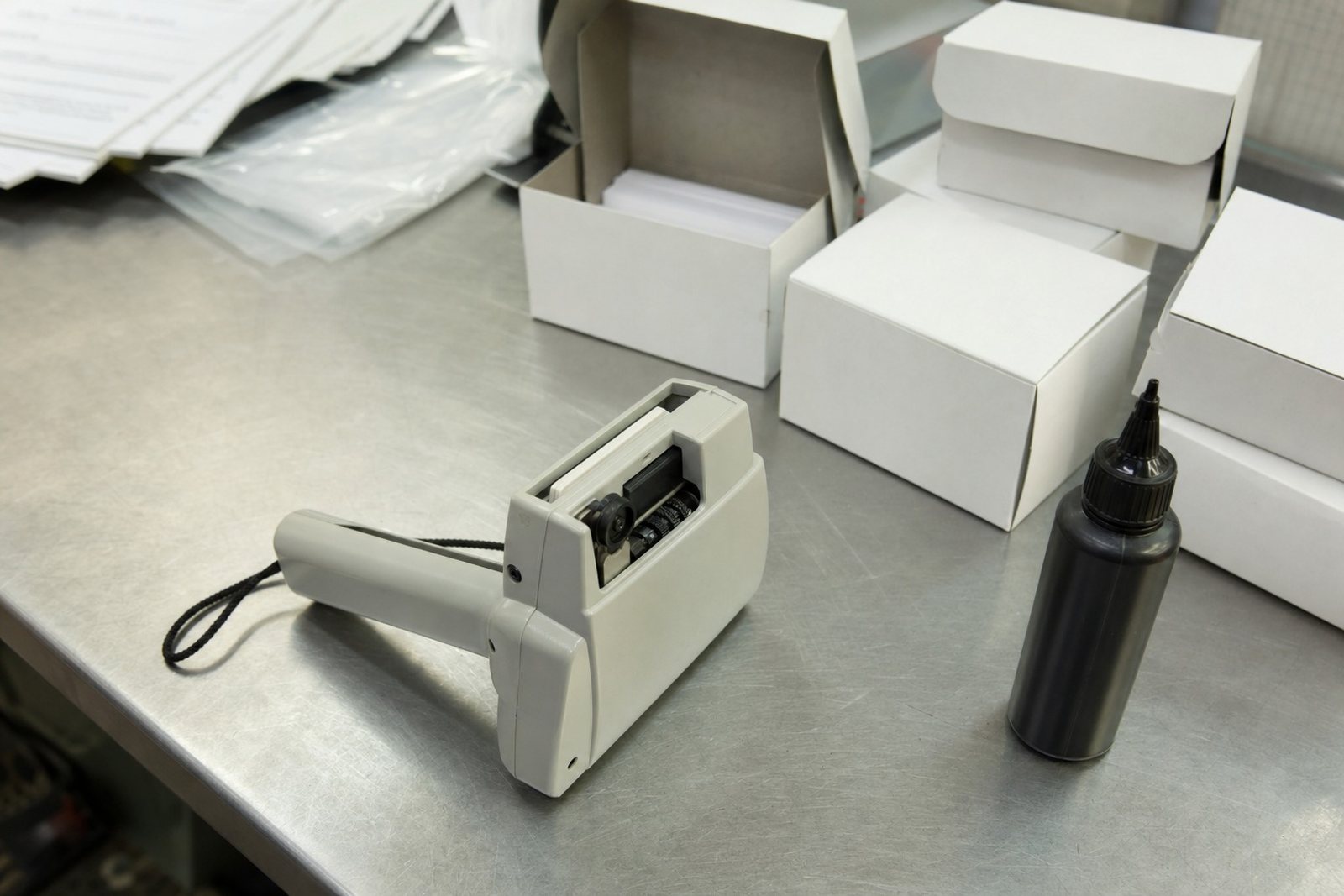


White ink for high-contrast marks on dark stock
White ink is the option many crews ask for when black, brown, green or painted surfaces make standard coding hard to read. In handheld inkjet work it is used for date codes, batch numbers, shift marks, short text, logos and barcodes where the surface colour would swallow a darker ink.
On dark plastic pipes, coated packs, sealed cartons and timber with a deep stain, the mark needs enough opacity to sit on top of the material instead of sinking into it. That is where the right white formulation matters, especially when the surface has a slight sheen or picks up handling marks during packing and dispatch.
- Helps coding stay visible on dark backgrounds
- Used for cartons, pipes, timber, steel and coated packs
- Works with short text, logos and select barcode layouts
- Best matched to the surface finish before loading into the coder
Ink formats and bottle sizes we stock for hire jobs
White ink for handheld printers is supplied in formats suited to the coder and the job length. Depending on the unit in use, the supply may be arranged as a cartridge, a refill bottle or a sealed consumable pack for the specific print head. The fitting method matters because the wrong fill can affect nozzle health and print sharpness.
For short runs and mixed-site work, smaller containers are often easier to manage. Larger hire jobs, especially where cartons or pipe bundles are marked daily, usually suit a bigger supply allowance so the operator is not pausing to top up too often. The ink choice also has to match the surface, because a glossy film, rough timber face and powder-coated steel do not behave the same way.
- Cartridge style supply for certain handheld coders
- Refill bottle supply for supported units
- Small and larger volume options, depending on the hire term
- White pigment handling needs proper mixing before use
Where white ink pays off in the yard and on the line
This ink suits dark pipes coming off fabrication, coated retail packs, coloured cartons, drums with painted panels and timber where the grain is too dark for standard marking. It is also useful on steel sections that need a clear identification mark before storage or despatch. For Durban and the coast, the surface finish matters even more because humidity and handling can change how the mark settles on the material.
On rough timber, the print can break slightly around the grain if the setup is too fine. On smooth coated packs, the opposite can happen and the mark may sit too high if the ink volume is heavy. A proper test print on the actual surface keeps the coding legible and avoids wasted stock.
- Dark pipework in plumbing stores and industrial yards
- Coated cartons and printed packaging with darker faces
- Painted steel, profiles and cut lengths
- Timber packs where a pale mark is needed for picking or traceability
Print setup, fitting and surface checks before the first mark
White ink needs the coder, print head and surface to work together. The unit has to be loaded with the correct consumable, the message has to sit in a clear print area and the head gap should suit the material height. If the surface is curved, dusty or slightly oily, the setup may need a firmer hand and a test pass before production starts.
Fitting support is part of the hire service. That can include message loading, print height adjustment, barcode spacing, logo positioning and test printing on site or by remote setup help. Where the surface is especially smooth or sealed, a quick-dry or solvent-based option may be the better match. Water-based ink can suit some cartons and timber jobs, but it needs the right surface and drying conditions.
- Check surface colour, coating and finish before loading white ink
- Confirm whether the mark must read across flat or curved areas
- Set the print height to suit the pipe, pack or board thickness
- Use test prints to confirm opacity, edge quality and barcode legibility
Care notes for keeping white ink working properly
White ink carries pigment, so it needs steadier handling than plain dye-based marking fluid. If the bottle or cartridge is left standing for long periods, the pigment can settle and the print may thin out. Gentle mixing, secure storage and clean filling practice all matter when the hire runs over several weeks.
A coder that sits in a dusty packing area or near cut timber should have its cap and nozzle checked often. Lint, sawdust and overspray can affect the first few marks of the day. For steel yards and pipe handling areas, a clean wipe around the print zone helps the ink sit where it should.
- Keep sealed supplies out of direct sun and heat
- Mix pigment carefully before loading if the format calls for it
- Wipe the print area before long production runs
- Use the right cleaning method for the specific unit and ink type
Weekly and monthly hire terms for South African sites
White ink supply is available through weekly and monthly hire terms for crews in Pinetown, Durban, Pietermaritzburg, Johannesburg, Cape Town and Richards Bay. The hire can include the printer, the ink chosen for the job, backup unit support where needed and consumables supply for the agreed period. That suits short production bursts, seasonal packing, or longer plant use where a clear white mark has to stay readable through handling and storage.
Delivery and collection can be arranged with on-site setup, remote setup help and operator training. The team also supports barcode setup, logo setup, troubleshooting and test printing, so the white ink is matched to the actual material before the job runs. If the order is for a rough timber pack, a coated carton run or a pipe marking line, the setup should reflect the real surface, not just the code on paper.
- Weekly hire for short runs and project work
- Monthly hire for ongoing coding needs
- Delivery and collection across main South African centres
- Consumables and backup support can be included where the job calls for it
Details to confirm when placing a white ink order
When ordering white ink, the important details are the surface, the print content and the coder model in use. It helps to know whether the job is cartons, pipes, timber or steel, and whether the mark must be text only or include a barcode or logo. The required print height also matters, because a 2 mm date code and a 12 mm logo do not use the same setup.
It also helps to state whether the surface is glossy, coated, dusty, rough or curved, and whether the job will run indoors or in a yard. For hire coordination, we need the job length, whether you want weekly or monthly hire, and the town where the coder will be used. That allows the team to match the ink type, print head settings and support needed for the job at hand.
- Surface type and colour
- Message content, including dates, batch numbers, barcodes or logos
- Required print height and placement on the item
- Job length, weekly or monthly hire preference, and site town
Key facts
| Ink colour | White pigment ink for dark and coated surfaces |
|---|---|
| Compatibility | Handheld inkjet coders with supported cartridges or refill systems |
| Print height range | Typically 2 mm to 12 mm, depending on coder and nozzle setup |
| Best surfaces | Dark pipes, coated cartons, painted steel, stained timber |
| Ink types | Solvent, water-based and quick-dry options, matched to the surface |
| Hire terms | Weekly or monthly rental with setup support and consumables supply |