Start with the surface, not the message
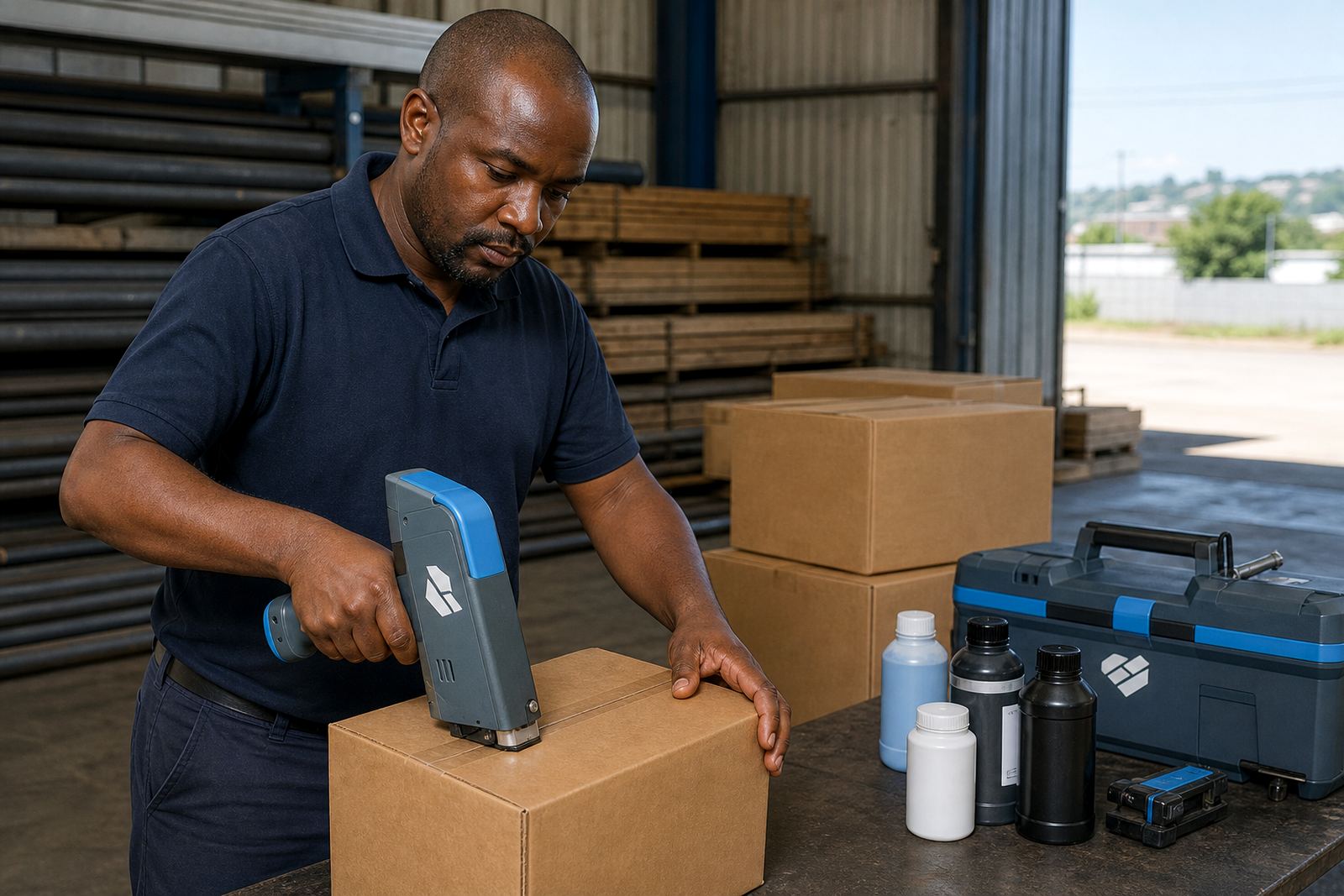
The first step is to match the ink to the surface you want to mark. Cartons, woven bags, timber, steel and coated plastics all behave differently, so a message that looks sharp on one material can smear or fade on another. Handheld inkjet coders work best when the ink is chosen for the job, not just for the colour on the page.
For hire work, we usually look at three things: how porous the surface is, whether the item will be handled straight after printing, and whether the mark must survive moisture, dust or rubbing. A clean test print on a sample panel saves a lot of trouble later.
- Porous surfaces usually suit water-based or quick-dry ink.
- Non-porous surfaces often need solvent ink for better grip.
- Rough timber may need a bolder print height than smooth cartons.
Solvent ink for harder, smoother materials
Solvent ink is usually the practical choice when the surface does not absorb much at all. It dries by evaporation, which helps it sit on steel, coated boards, plastics and many treated surfaces. On a busy packing line or at a yard gate, that faster set can make a real difference if the items are moving straight after coding.
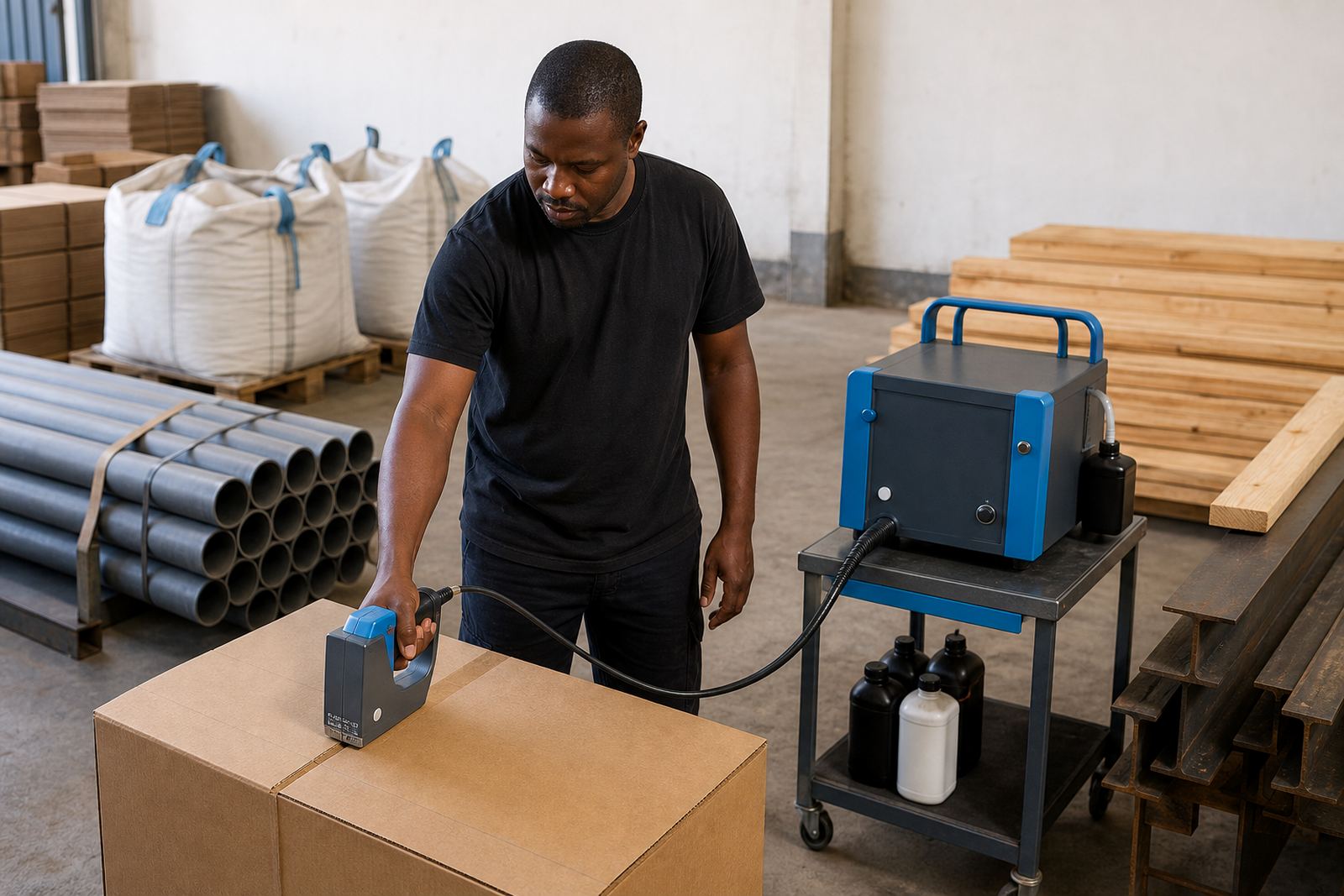
It is also useful where the print has to stay legible through handling, light moisture and general site wear. For pipes, metal sections and certain coated cartons, solvent ink gives a sharper edge than a standard water-based option. The trade-off is that it needs the right nozzle care and a clean surface before printing.
- Best on metal, coated surfaces and many plastics.
- Good when the mark must dry fast after printing.
- Needs a properly cleaned surface for best adhesion.
Water-based ink for cartons, timber and absorbent stock
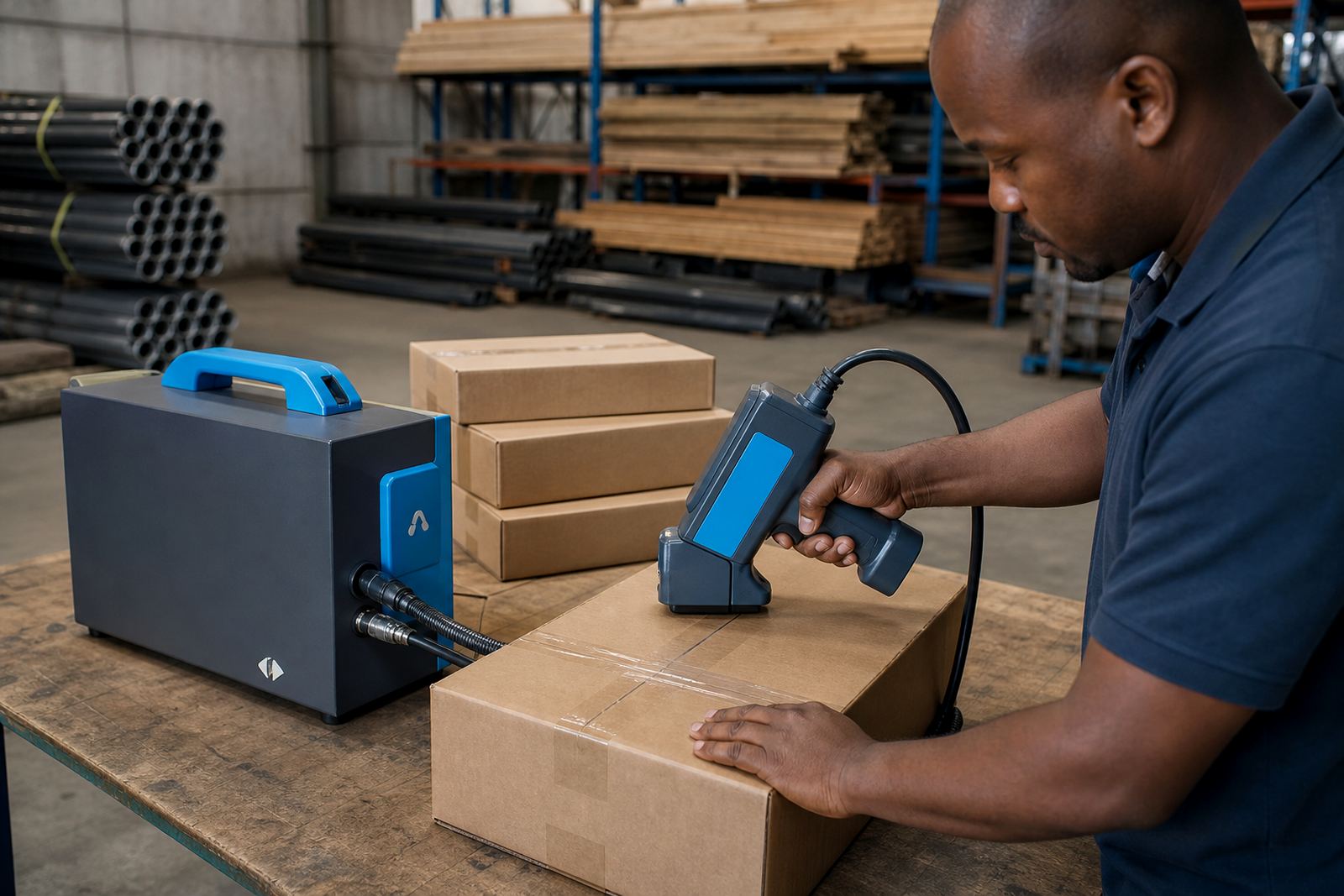
Water-based ink suits absorbent materials where the surface can take the liquid in and hold the image. Cartons, paper sacks and untreated timber are common examples. When the item is dry and clean, this ink often gives a clear, economical mark for dates, batch numbers and short job codes.
It is a sensible option for many warehouse and packing jobs in Durban and Pinetown where corrugated board is the main surface. On rough timber, the print height may need a little adjustment so the characters stay legible across the grain. On dusty stock, a quick wipe before printing makes the result far more dependable.
- Best for cartons, paper sacks and raw timber.
- Works well on absorbent surfaces with open fibres.
- Needs a dry, dust-free print area for clean characters.
Quick-dry ink when handling starts immediately
Quick-dry ink sits between the two common choices and is often used when speed matters and the surface still needs a neat finish. It can suit both absorbent and some less absorbent materials, depending on the exact coder setup and the surface condition. That makes it useful for mixed batches where cartons, sleeves and timber may all be in the same run.
For hire jobs, quick-dry ink is often selected when operators are moving from test prints into production without much pause. It helps reduce smudging where the printed item is picked up, stacked or strapped very soon after marking. The print still needs the right height and a steady hand, especially on curved or uneven items.
- Useful for mixed material jobs.
- Helps reduce smearing where handling starts fast.
- Needs the correct nozzle setting for crisp barcodes.
Print height, barcode size and how clean the code must be
Ink choice also affects how the code reads. A short batch code on a carton can work at a small print height, but barcodes need enough clarity for scanners to pick up each line. On rough timber or pitted steel, the characters may need to be larger so the message stays readable after the first move or two.
Our team checks the message layout before the unit goes out, especially when barcodes and logos sit on the same line. If the print is too fine for the surface, the result can look tidy to the eye but fail at the scanner. That is why message loading and test printing go together.
- Smaller text suits smooth, even stock.
- Barcodes need clear contrast and even spacing.
- Rough or curved surfaces often need larger characters.
A straightforward hire checklist for the right ink
Before delivery or collection, it helps to know what you are marking, how many surfaces are involved and whether the job runs indoors or outdoors. A carton job in Johannesburg may only need one ink type, while a mixed timber and steel job in Richards Bay may call for a different setup. Wet surfaces, high dust and oily residue all change the result.
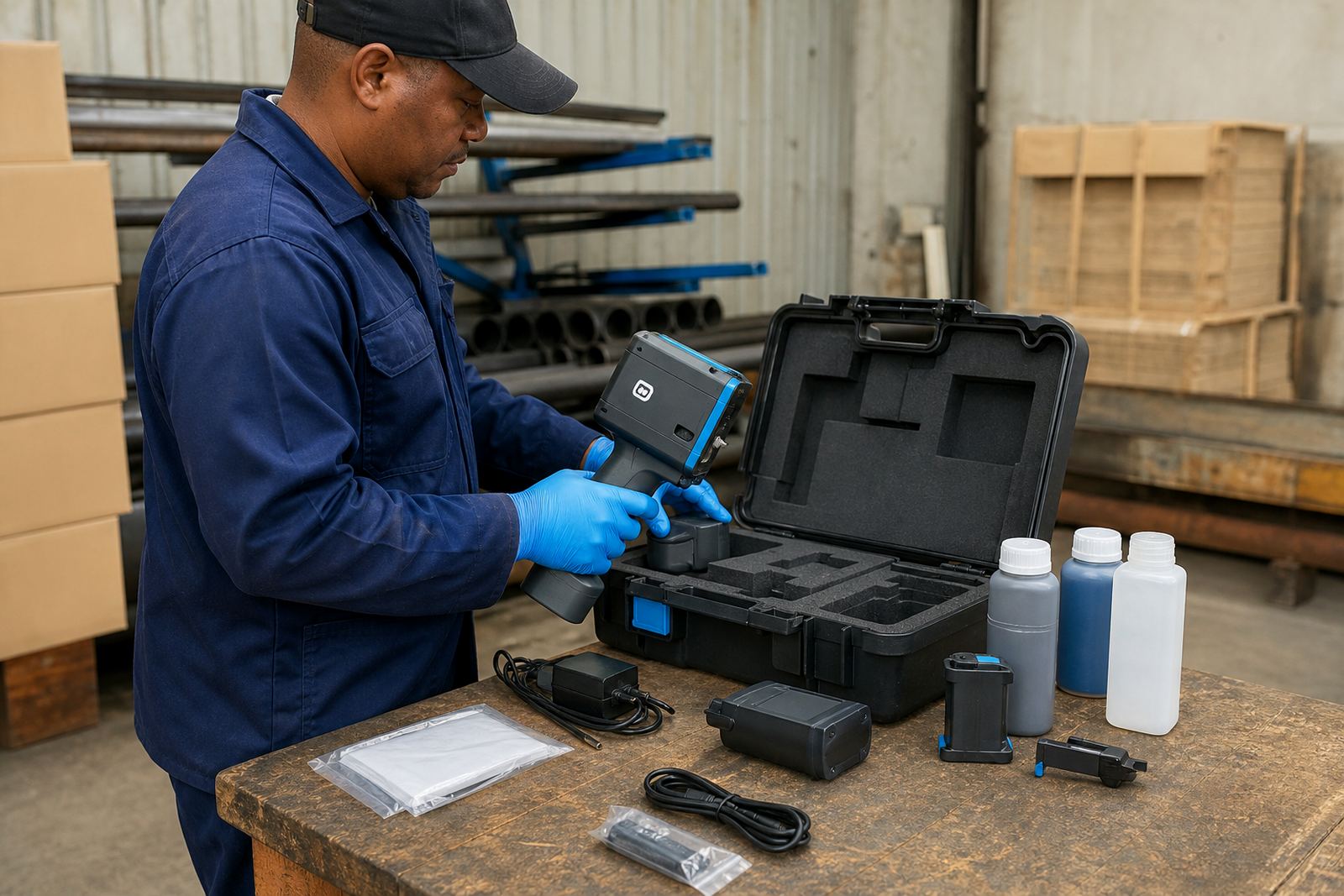
When you share the material type and the message layout, the hire process is easier to match to the job. We can supply the ink, set the message, help with barcode setup and test the first prints on site or through remote setup help. If the work changes during the hire period, the ink plan can be adjusted to suit the new stock.
- Send the surface type and print content together.
- Say whether the item is dry, dusty or coated.
- Ask for consumables supply if the run is long.