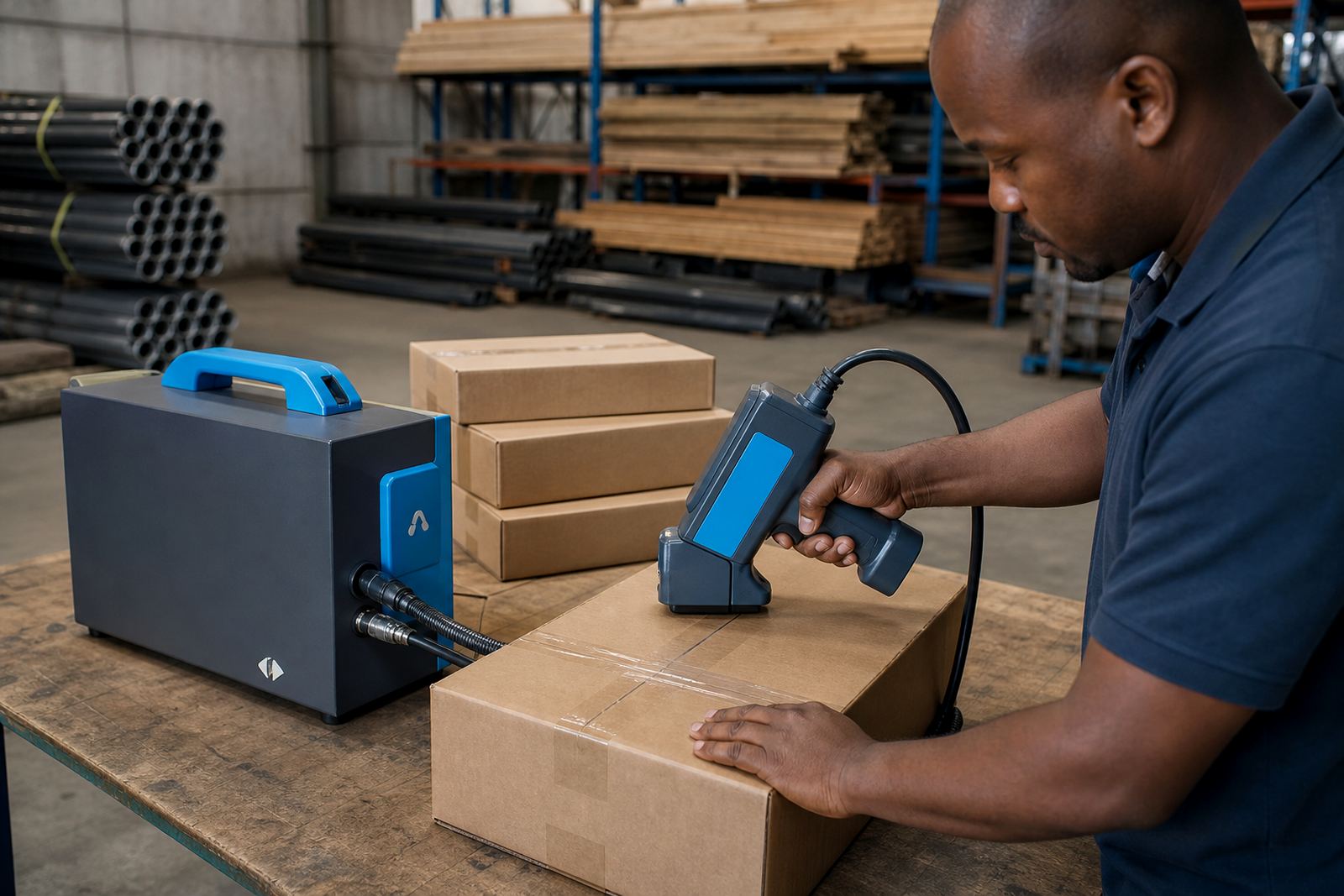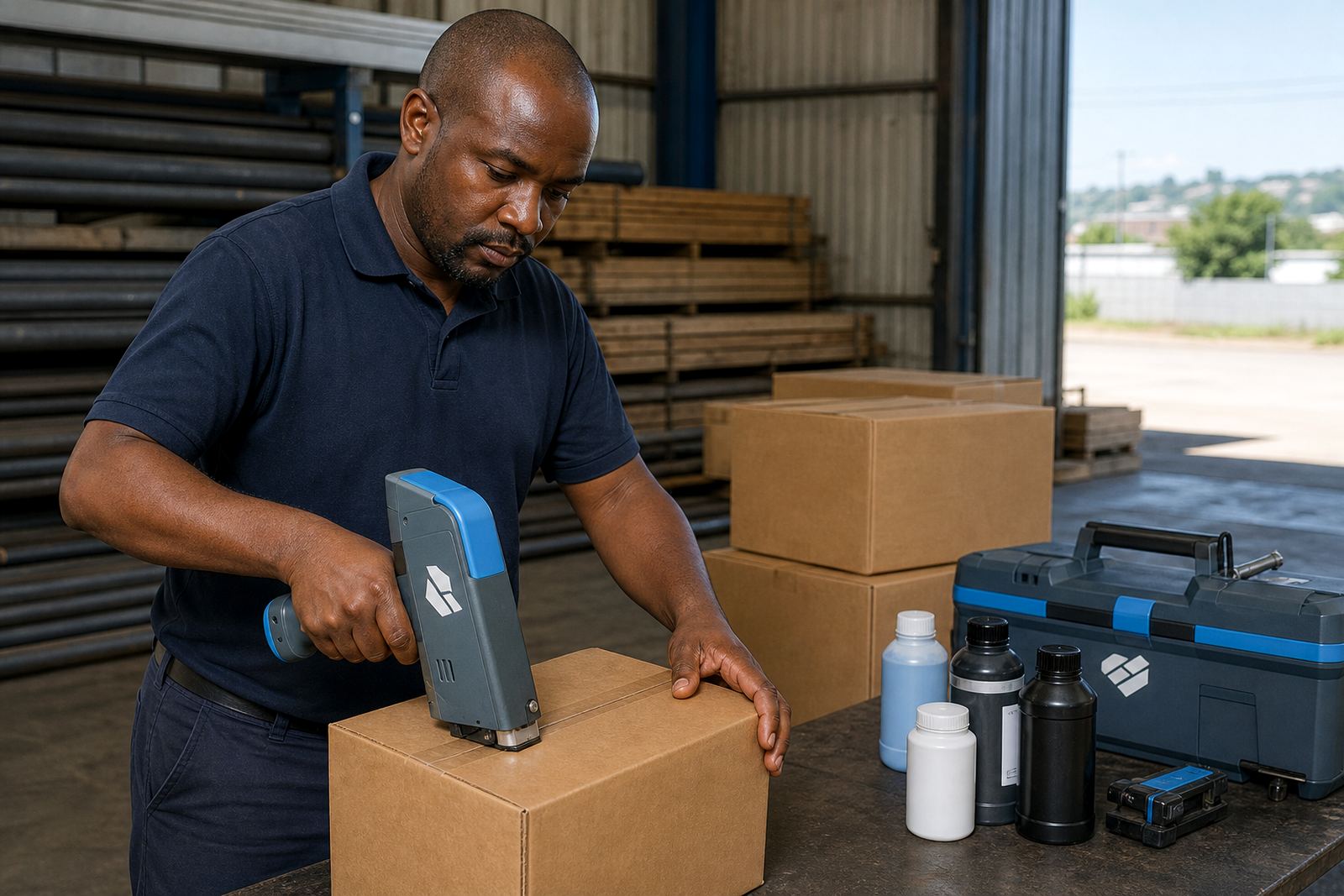
Cartons that move through packing lines
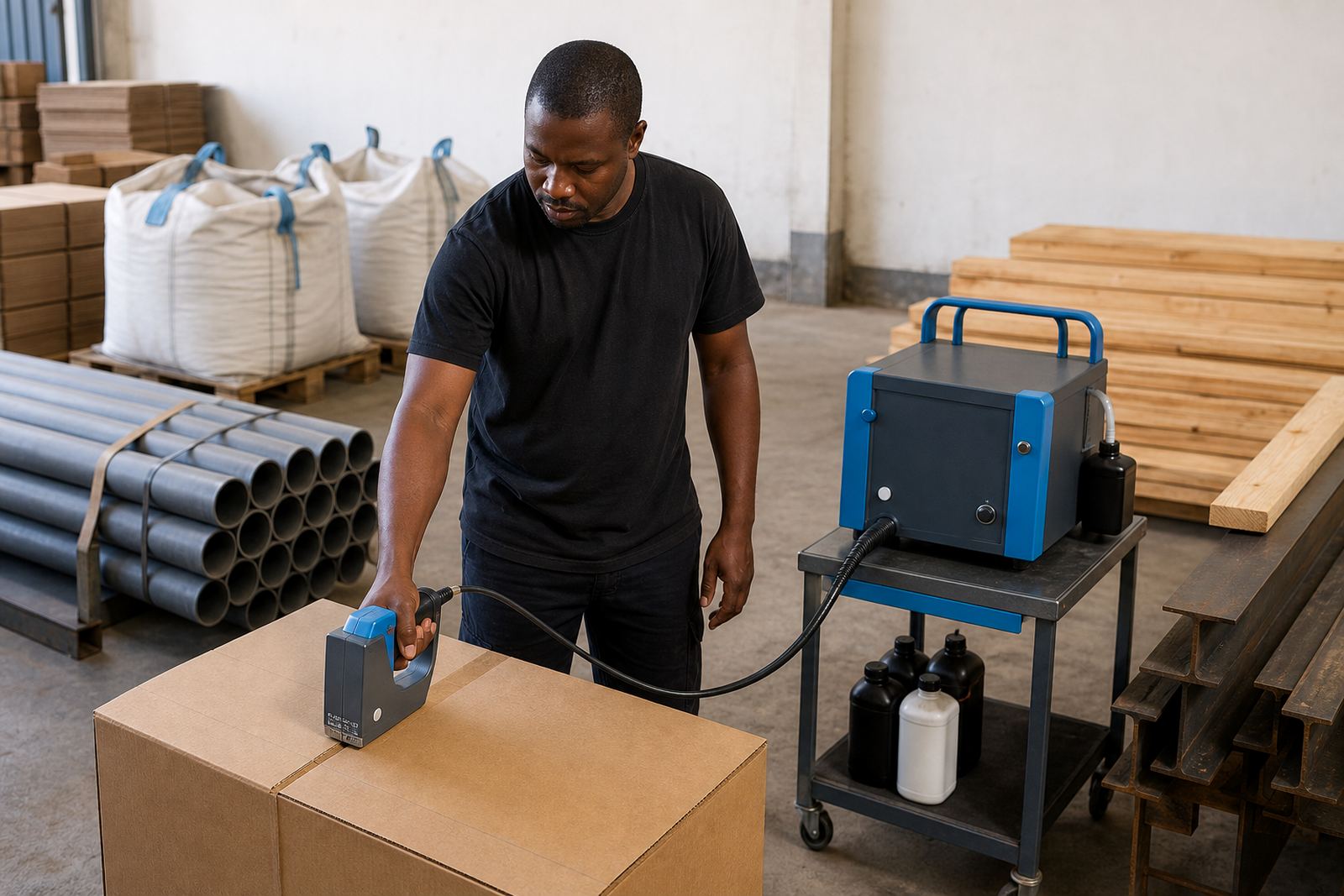
Plain carton board gives steady results when the print head sits square and the surface is dry. For date coding, batch numbers and short logos, a quick-dry or water-based ink is often the first check because carton stock can vary from light, absorbent board to coated board with a harder face.
On cartons, the main job is keeping the printer moving at a steady pace. Too much hesitation can make the print blur, while rushing can leave gaps in barcodes or thin text. Flaps, tape seams and crushed edges also affect print quality, so a flat test area is worth using before full production starts.
- Use a clean, dry panel with no dust.
- Keep the print height within the unit’s working range.
- Check that barcode bars stay dark and evenly spaced.
- Place the code where cartons will not rub during handling.
Bags that flex, crease and shift
Bags need a lighter touch because the surface can move while the operator prints. Woven sacks, paper sacks and laminated bags all behave differently, so ink choice matters. Solvent ink often suits less porous or coated bag material, while paper-based bags can accept quicker drying inks with less spreading.
Where a bag folds or wrinkles, the print can break across the crease. That is normal on flexible packaging and it is better to print on the flattest section available. A logo may need more space than a date line, especially if the bag is narrow or the handle area leaves little room.
- Flatten the bag before printing where possible.
- Keep clear of stitched seams and gussets.
- Test the logo at the final size, not smaller.
- Allow enough space for batch code and expiry line together.
Pipes and cylindrical stock need a stable hand
Pipes are often printed while resting on trestles or rollers, and that setup must stay steady. Round surfaces create a curved print path, so the coder needs an even hand movement to stop the characters from stretching. On plastic pipe, solvent ink is often used; on metal pipe, a stronger drying ink may be needed depending on the surface finish.
Diameter also changes the result. Small pipe leaves less room for a long message, while larger pipe can take a barcode, date and item reference without crowding. If the pipe is dusty or carries mould-release residue, wipe it first because residue can break the ink film.
- Secure the pipe so it does not roll.
- Print along the straightest section available.
- Reduce message length when pipe diameter is small.
- Check the code from more than one angle before release.
Timber grain, knots and rough cuts
Timber is one of the trickiest surfaces because grain, knots and saw marks all absorb ink differently. Water-based ink can work on some timber grades, while solvent or quick-dry ink may be better where the grain is open or the board has a resinous finish. Rough-sawn pieces often need a fuller test than planed boards.
Knots can reject ink, and very rough timber can leave a broken edge on letters and numbers. For larger timber, a bold print style is easier to read than thin detail. If the timber is freshly cut, surface moisture may also affect the result, so a test strip helps before the main run starts.
- Test on the same timber grade that will be used in production.
- Avoid knots when placing the code.
- Keep the print head moving evenly over rough grain.
- Use a larger character height where the board allows it.
Steel surfaces and the marks they hold
Steel gives a crisp result when the surface is clean and free of oil. Galvanised steel, painted steel and bare steel each need a different look at adhesion, because the finish can change how the ink settles. For metal, quick-dry or solvent ink is commonly used, especially when the mark must sit clearly on a harder face.
Shiny steel can show smudging if the message is handled too soon after printing. A small test square or test line can show whether the ink sits properly before the full code is applied. If the surface carries cutting oil, rust dust or polishing residue, those must be removed first or the message can lift at the edges.
- Wipe the surface before printing.
- Test on the same finish, not on scrap of a different grade.
- Leave enough room for a barcode if one is needed.
- Use a layout that stays readable on reflective metal.
Choosing ink and print height for the job
Ink choice and print height work together. A tall message on a rough surface can look heavy and uneven, while a short code on a smooth carton may only need a smaller height. The right setup depends on surface absorbency, how fast the item moves through the job, and whether the mark must be read by eye or scanned as a barcode.
As a rule, clearer surfaces allow more detail, while rough or flexible surfaces need simpler messages. Ink selection should match the material first, then the message size can be adjusted around that. When a logo, batch line and barcode all need space, it helps to build the layout with each element on its own line.
- Use smaller print heights for tight spaces.
- Use bolder characters on rough or uneven stock.
- Keep barcode quiet zones clear around the code.
- Confirm the layout before the full run starts.
Hire terms, setup help and support for mixed surfaces
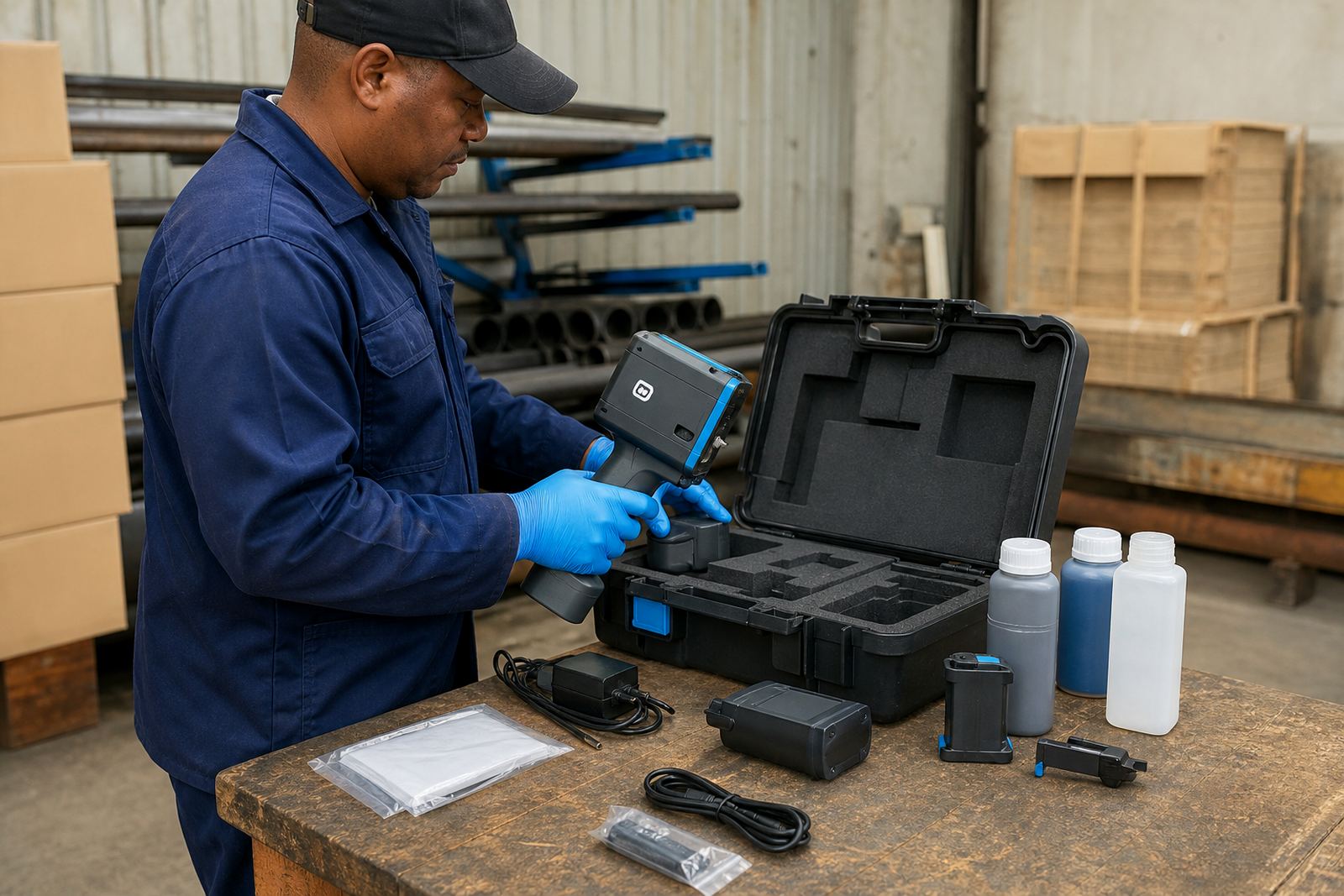
Renting by the week or month suits short production runs, seasonal packing and trials across different materials. Some customers need cartons this week, then pipe or timber later, so the surface guide matters when changing from one job to the next. Delivery and collection can be arranged across Durban, Pinetown, Pietermaritzburg, Johannesburg, Cape Town and Richards Bay, with on-site setup, remote setup help, operator training and consumables support available for the hire period.
The support team handles message loading, logo setup, barcode setup, test printing and troubleshooting support, and backup unit support is available for jobs that cannot wait on a single machine. Sibusiso Moagi leads the business, with Nokuthula Kotze on hire coordination, Jared Rademeyer on technical support, Anele Vermaak on training, Priya Pillay on operations and Morne Oosthuizen on field setup. Ask about the surface you need to print on using the contact form, which helps the right ink and setup be matched to the work.
- Tell us the surface type and finish.
- Include the message length and line count.
- Say whether the job needs a barcode or logo.
- Mention if the stock is flat, curved or flexible.