
Pipe marks that stay readable through handling
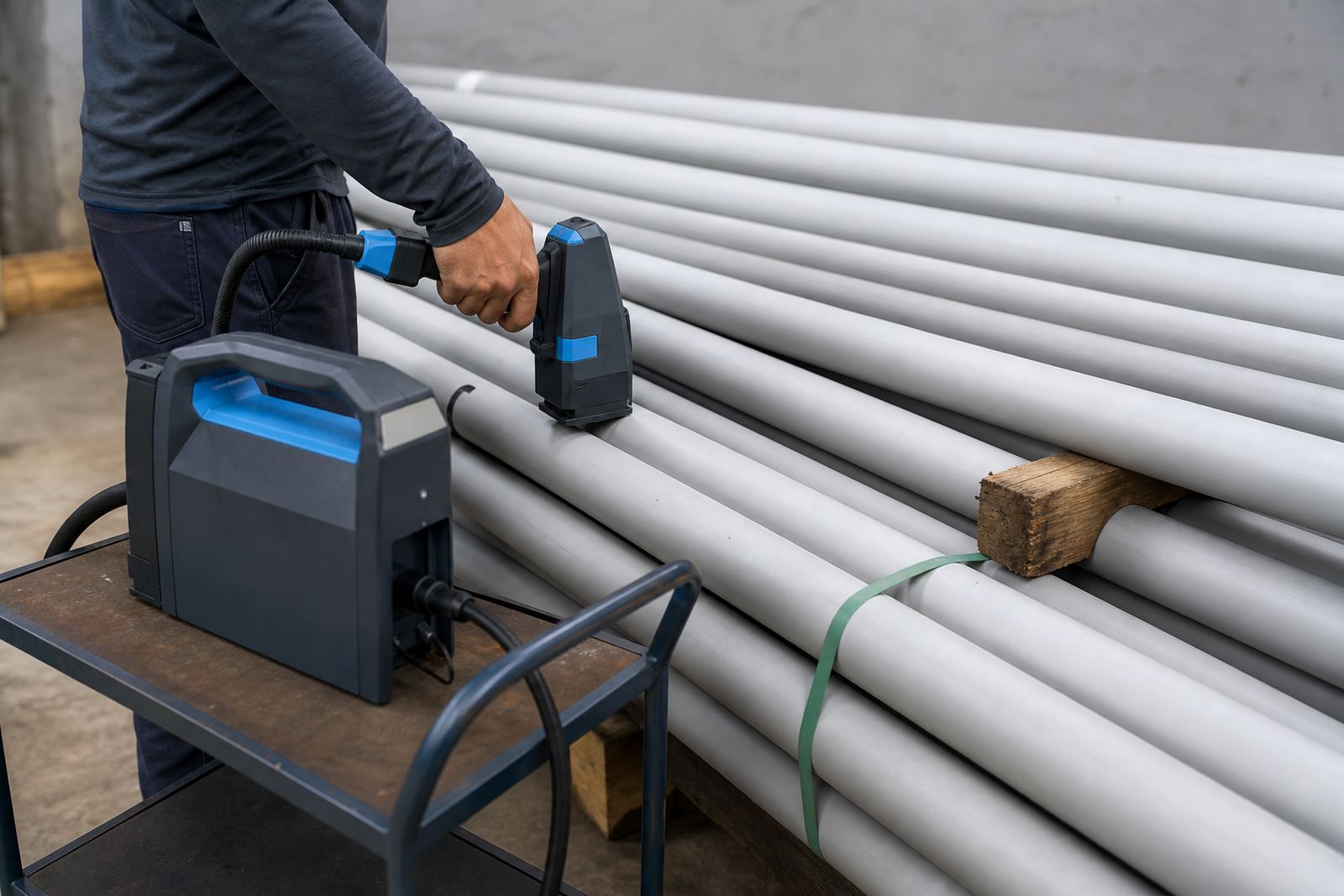
Serials on pipes usually need more than a date stamp. A yard may want a rolling number, coil or bundle reference, heat number, order code, or a short logo beside the serial so the pipe can be matched later at loading, cutting or installation. Handheld inkjet printers suit this work because the operator can move along long lengths and place the mark where it will stay visible after stacking or bundling.
On coated pipe, bare steel, galvanised sections and painted stock, the print has to suit the surface. Smooth pipe often takes a cleaner line, while rough or oily surfaces need the right ink and a steady hand. Print height usually sits between 7 mm and 12.7 mm for compact serials, with larger formats available where the mark must be read from a distance. For mixed yard work, a clear block font and a short serial string usually give the best result.
Equipment set for pipe serials and handling control
A typical hire set includes the handheld coder, a charged battery, the correct ink cartridge or refill, a charger, and a guide for message layout. For pipe marking, quick-dry ink is often used on steel and coated surfaces where handling starts soon after printing. Water-based ink can suit absorbent or porous materials in other jobs, while solvent ink is common where adhesion and drying need stronger performance on metal or slicker surfaces.
- Handheld inkjet coder for portable marking along pipe lengths
- Quick-dry, solvent or water-based ink matched to the surface
- Message setup for serials, fixed text, dates or batch codes
- Barcode or logo setup where the pipe label needs more than numbers
- Test printing on offcut material before the main run
Set the unit to the correct print direction and spacing before marking the first production piece. If the pipe carries a galvanised finish or light oil residue, a test mark helps check adhesion and legibility before the batch moves out. That small check avoids a lot of waste later on.
Layout planning before the first length is marked
Pipes rarely offer a flat, easy print zone so layout matters. The serial should sit where fitters, store staff or inspectors can read it without turning the pipe through every stage. On bundled stock, the mark often works best near one end, leaving the rest of the length clear for lifting, cutting and banding. If the same pipe type leaves the yard in different lengths, the serial format should stay consistent across all lengths, with a separate prefix or suffix if needed.
Planning also covers the message itself. A fixed serial can run in order through a batch, while a mixed code may include the pipe size, shift, job number or delivery run. Longer strings are possible, but the more characters you add, the more care the operator needs on speed and spacing. For sites in Durban, Pinetown and Richards Bay where humidity can affect drying, ink choice and handling sequence matter even more.
- Keep the serial in one standard position for each pipe type
- Leave enough clear space for bands, stickers or lifting marks
- Use a font and height that stay legible after transport
- Match the ink to the surface and expected handling speed
- Test on a spare pipe before moving into full production
Common mistakes on pipe coding jobs
One common mistake is treating every pipe surface the same. Bare steel, galvanised pipe and coated pipe do not behave alike, and the wrong ink can smear, fade or lose contrast too quickly. Another issue is printing too close to the end of the pipe where straps, chutes and stacking damage the mark. A serial needs protection as well as visibility.
Operators also run into trouble when they try to print long strings at high speed without checking the alignment. A handheld coder can place neat marks, but only if the print head sits flat and the motion stays steady. Too much pressure can blur the line and too little can leave the serial patchy. If the pipe is oily or dusty, a quick wipe on the print zone often improves the result more than a second pass.
Barcode work brings its own problems. The symbol needs enough quiet space around it and the module size must suit the scan distance. A cramped barcode on a curved pipe can fail at dispatch even though it looked acceptable on the first print. That is why trial prints matter on real pipe surfaces, not just on a flat sample.
Weekly and monthly hire figures in rand terms
Hire terms usually depend on the length of the job, the ink needed, and whether setup, training or backup support is included. For short production runs, weekly hire often suits pipe yards that need serials for a specific dispatch or contract. Monthly hire can work better where coding stays in daily use across a longer supply cycle.
Budgeting in rand should allow for the coder, the right ink, spare consumables and any on-site assistance needed at the start. A smaller serial-only job will sit lower than a package with barcode setup, logo loading and repeated test prints. A broader hire with collection, delivery and operator training will naturally cost more than a straight unit-only rental. The cleanest quote is the one that matches the actual pipe volume, print size and handling conditions, not a generic guess.
- A one-week rental suits short production bursts and project dispatches
- Monthly hire suits ongoing pipe marking and yard stock control
- Budget for the coder plus the ink type that matches the surface
- Add setup, training and test printing where the line needs it
For clients across South Africa, delivery and collection can be arranged to suit the site and the job flow, including Durban, Pietermaritzburg, Johannesburg, Cape Town and Richards Bay. Pinetown, Westmead and New Germany are also regular service points for yard work and collections.
Working support for pipe yards and dispatch teams
Pipe serials are easier to manage when the operator has support from the start. Message loading, ink selection help, barcode setup and logo setup all matter where the printed mark is part of tracking and handover. If a print test exposes poor contrast or a layout issue, the setup can be adjusted before the main batch moves through.
For jobs that need extra control, backup unit support can reduce disruption if a unit needs swapping during the hire period. Remote setup help works for teams that already know their way around the pipe yard, while on-site setup is useful where the first batch needs hands-on guidance. The aim is clear identification on the pipe, with fewer errors at storage, loading and installation.
Handled properly, serial marking on pipes is plain work but it needs care. The right coder, the right ink and a sensible layout give the yard a mark that lasts through stacking, transit and use.