When outer cases need clearer marks
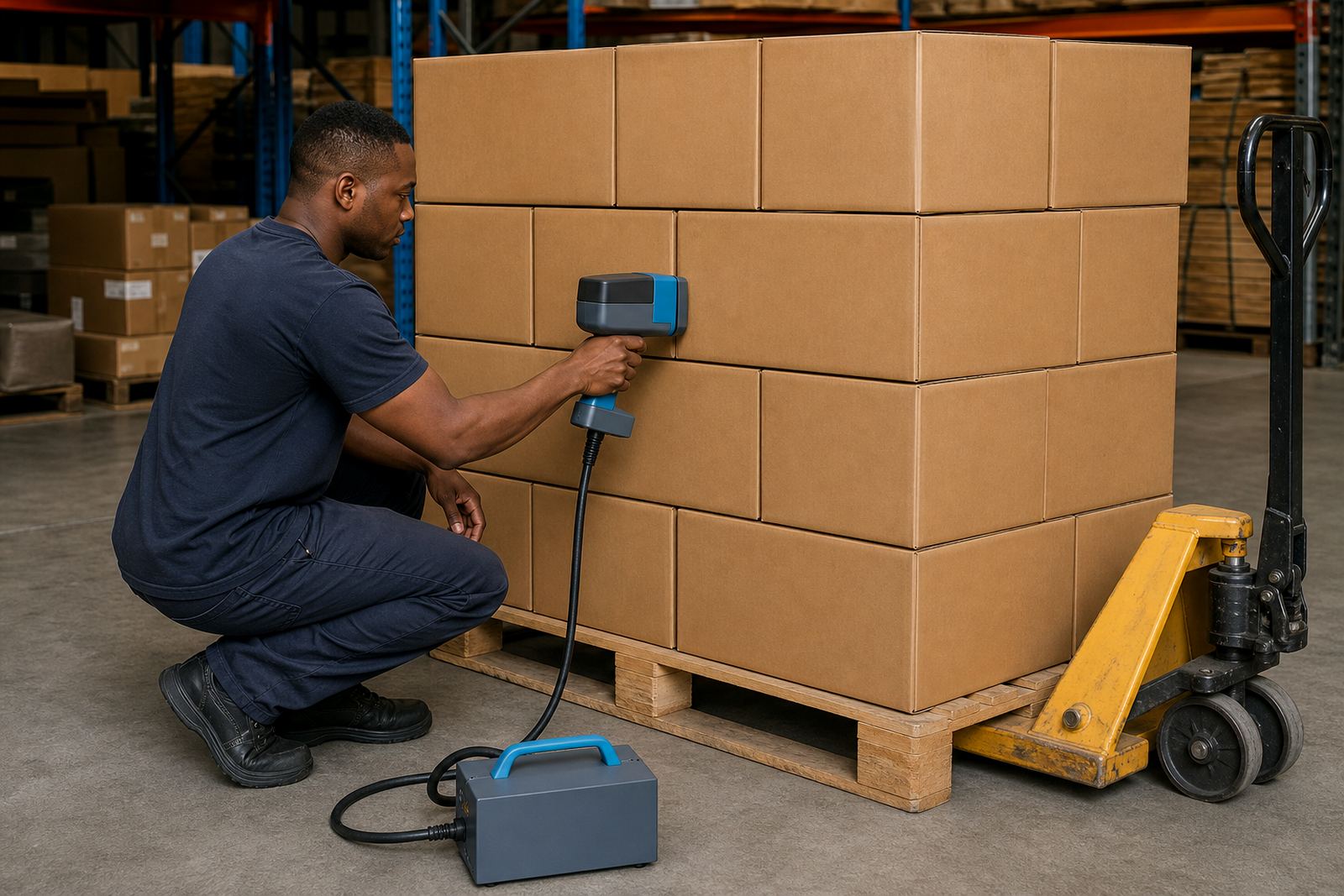
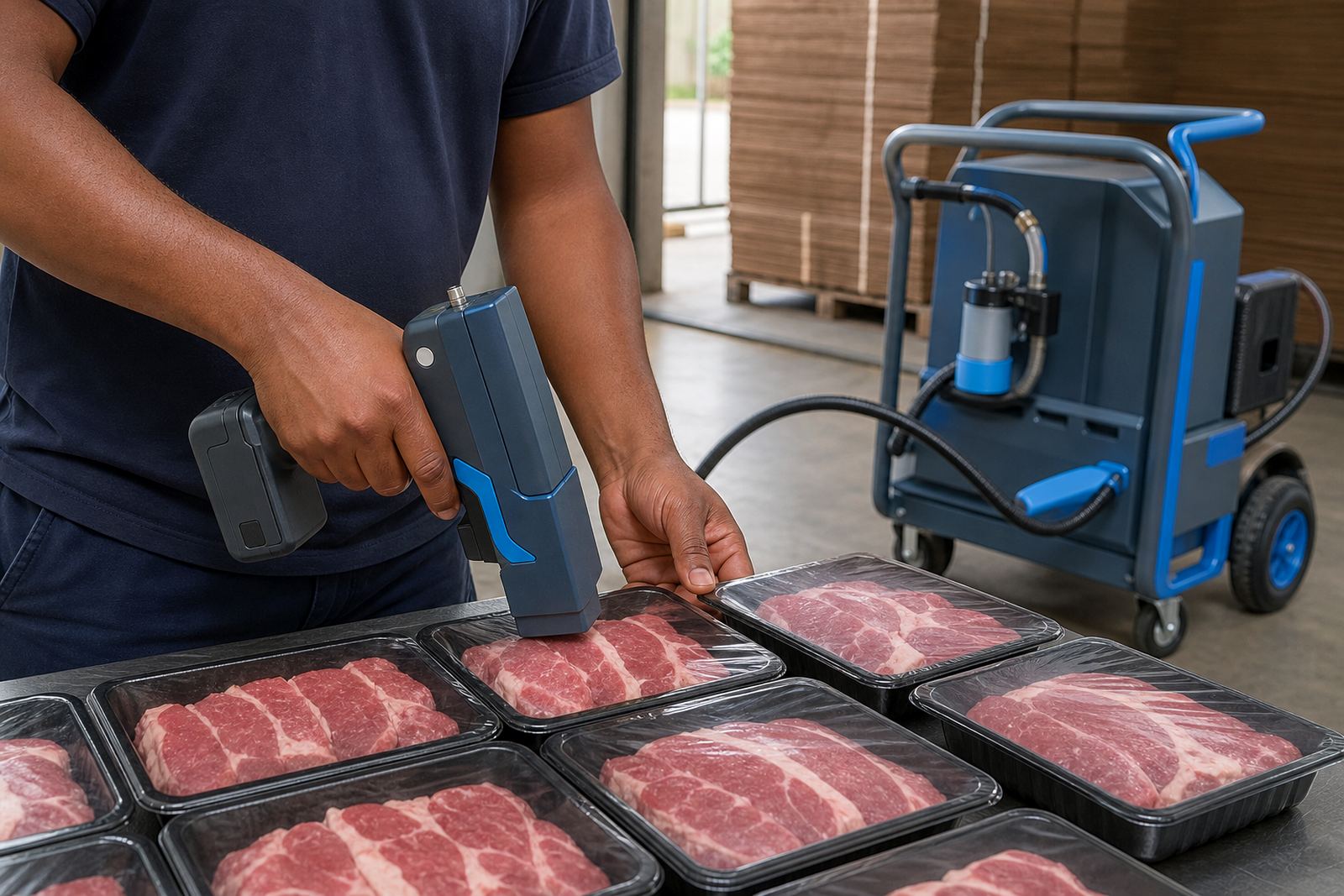
Outer case coding is used where goods leave the line in cartons, trays or wrapped bundles and still need a clean mark that survives handling. In Pinetown and Durban that often means warehouse dispatch, contract packing, food distribution, timber yards and product staging areas where labels are not always enough on their own.
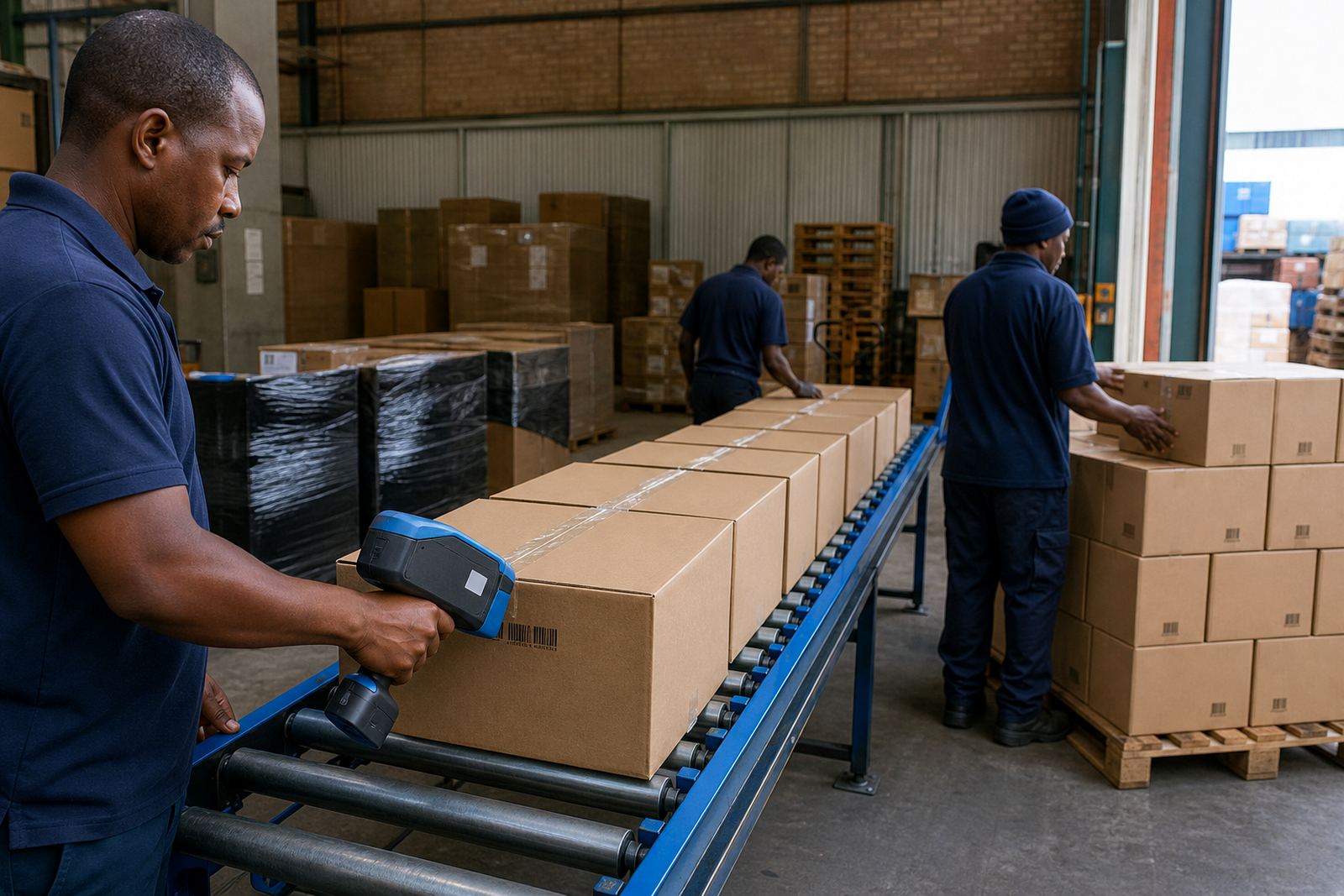
A handheld inkjet coder works well when cases move in different sizes or when the print position changes from shift to shift. The operator can print directly onto a side panel, end flap or top face, which helps when pallets are built by hand and the line is not fixed to one carton format. On rougher boxes the mark should be planned for legibility first, not decoration.
Clients usually hire this type of equipment when they need date coding, lot numbers, carton IDs, barcodes or a short logo. It is also useful where goods move from production into a warehouse holding area and the receiving team needs each outer case to match the paperwork without opening the pack.
The kit that usually suits carton and case work
For outer cases, the usual hire set includes a handheld inkjet printer, the correct cartridge type, charging gear and a few test pieces for setup. Print height matters because a small code can vanish on a large carton face, while an oversized mark can look untidy and crowd existing labels. Most jobs work with compact text for dates and batch numbers, then a slightly larger line for a logo or barcode.
Ink choice depends on the carton finish and what the pack touches in storage or transit. Quick-dry inks are often chosen for fast handling on coated board. Water-based inks suit some porous surfaces, while solvent inks are often used where adhesion and drying behaviour need more help on mixed packaging materials. If the case is dusty, damp or slightly textured, testing on the actual box is worth doing before the full run starts.
- Carton board and corrugated outer cases
- Printed batch details and dispatch references
- Linear barcodes and short internal codes
- Simple logos for warehouse identification
- Black or other high-contrast ink where the surface allows it
Planning the print position on a busy packing line
Before the hire starts, it helps to decide where the mark must sit on the outer case. A code placed too near a flap can be lost when the carton is folded, and a mark placed too low can rub off during stacking. For timber bundles or pipe packs, the best surface is usually the most stable one, not the most visible from the front.
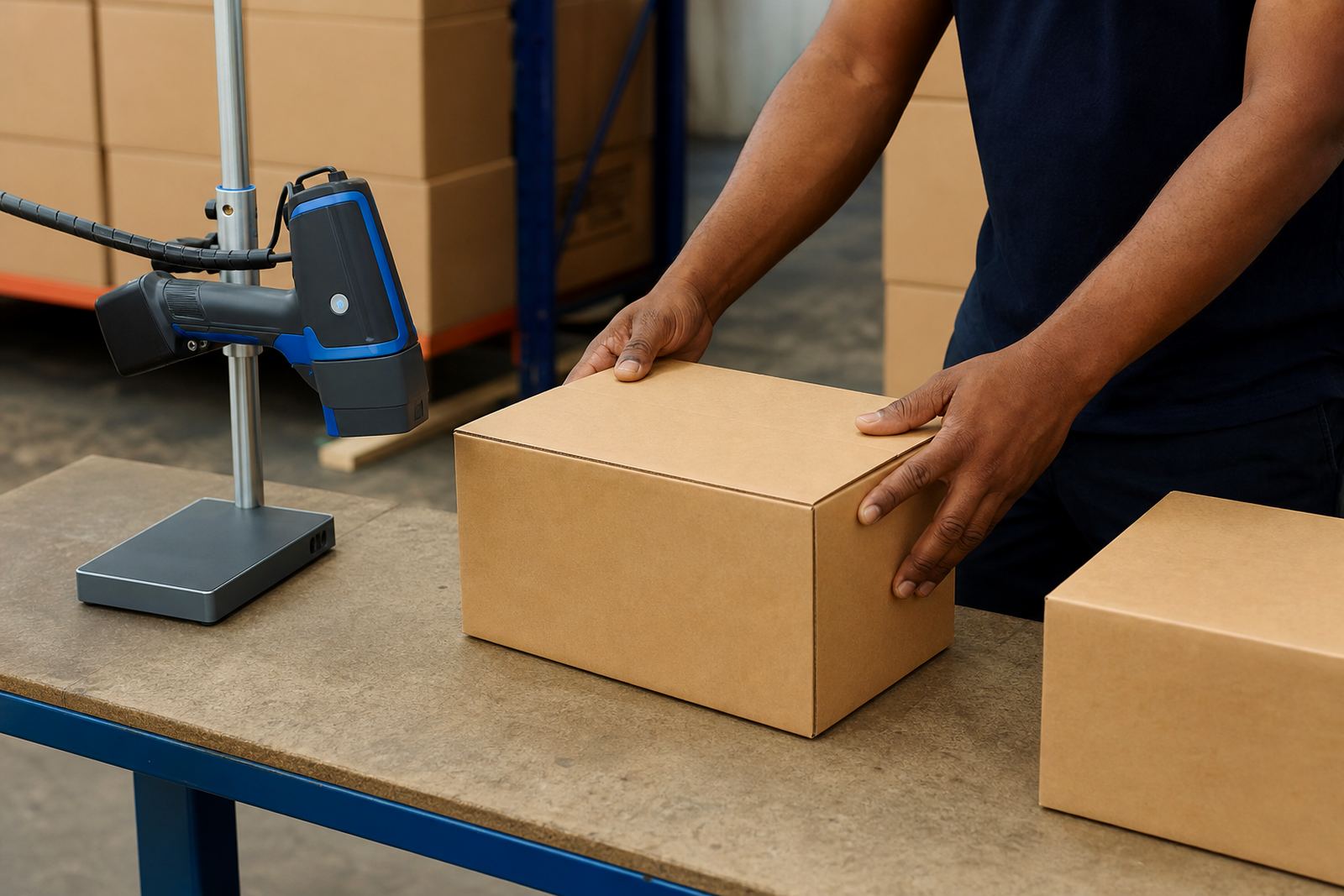
If the line is manual, one operator can usually code cases as they leave the packing bench. If the goods move on a roller path or loading table, the print height and hand position need checking so the coder stays square to the surface. That keeps the barcode clean and the letters even. On uneven cartons, a firmer wrist and slower pass often makes more difference than a larger mark.
- Choose one fixed print zone for each carton size
- Leave space clear of tape seams and corner crush
- Keep the code away from labels that can lift
- Test the mark after stacking, not only after printing
- Check the same layout on all pack variants
Common mistakes on carton and case coding
The biggest mistake is treating every case the same when the carton stock changes from one run to the next. A white board outer case behaves differently from a brown recycled carton, and a smooth wrapped pack needs different ink handling from a rough timber face. The print may look fine on the first sample, then fade or spread when the shift moves to another batch of packaging.
Another problem is loading too much information into a small area. A long product line, a full date string and a barcode can crowd each other if the print zone was never measured. It is better to trim the message to the essentials and use the right print height for the job. That keeps scanning simpler and reduces rework at dispatch.
Operators also run into trouble when the printer is treated like a label gun. It still needs a steady pass, correct distance and enough time for the ink to settle. On damp coastal stock in Durban or Richards Bay, or on dusty timber in inland yards, a test print should always be checked on the actual surface before the main batch starts.
Hire terms and budget ranges in Rand
Weekly hire works well for a short dispatch project, a seasonal rush or a one-off product run. Monthly hire suits ongoing warehouse coding, contract packing or regular batch marking where the same team uses the same format day after day. Delivery and collection, setup help, message loading and operator training can be arranged around the site in Pinetown, Durban, Westmead, New Germany and other South African locations we service.
Budget usually depends on the printer type, the ink selected, the message complexity and whether barcode setup or logo setup is included. A simple outer case coding hire can sit at the lower end of the range, while a longer hire with extra consumables, backup support and on-site setup sits higher. For planning, many jobs fall into a range of a few thousand Rand per week to a higher monthly figure when consumables and support are included.
For larger dispatch areas in Johannesburg, Cape Town or Pietermaritzburg, transport and site access can also shape the final cost. If the outer cases are printed across more than one shift, it helps to plan ink volume and spare units at the same time, not after the line is already running.