What steel yards usually need marked
In steel stock yards and fabrication stores, the marking job is often less about decoration and more about keeping bundles traceable. Coated sections, painted lengths and prepared components may need batch numbers, part references, shift codes or customer names before dispatch, and those details must remain legible after lifting, strapping and storage.
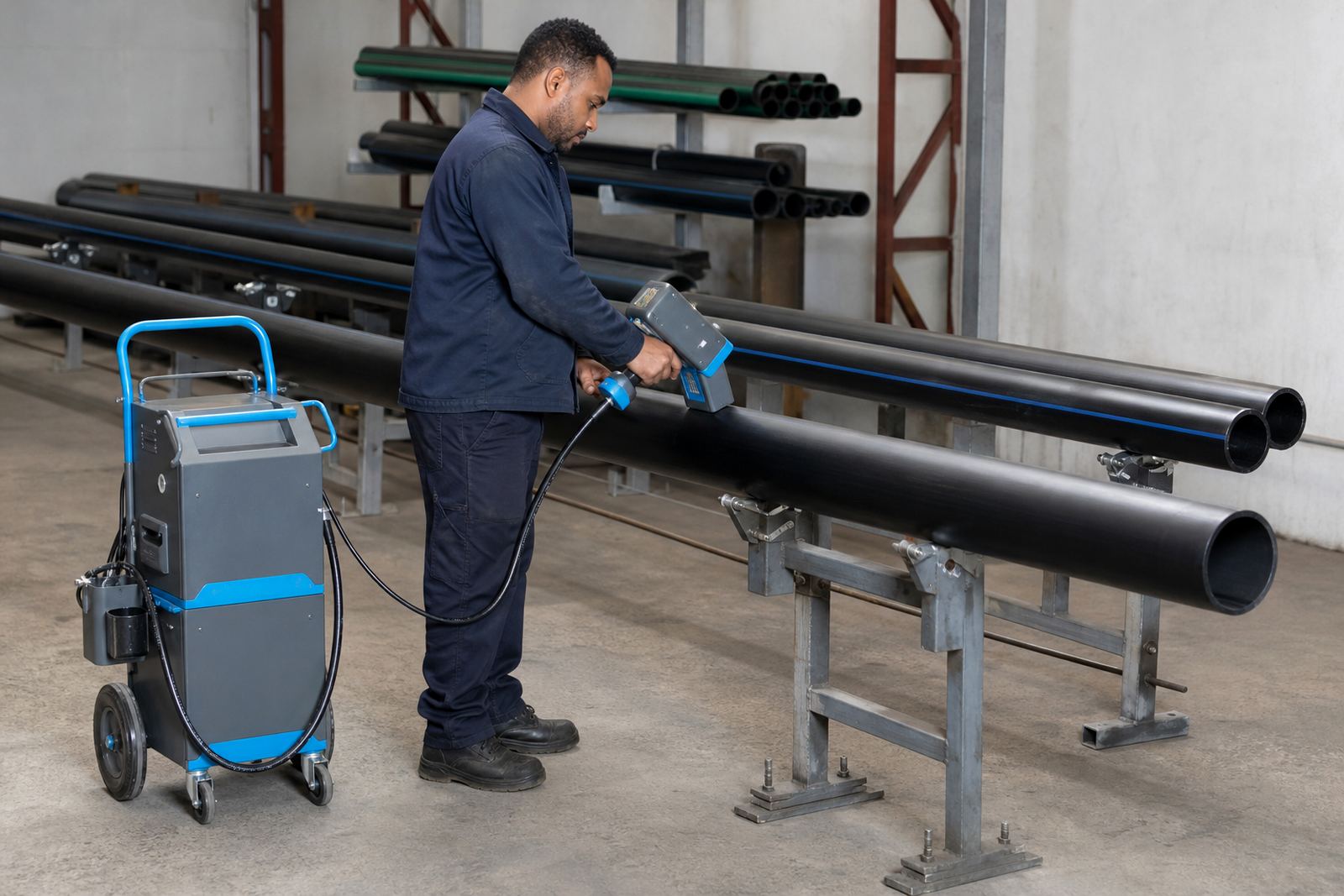
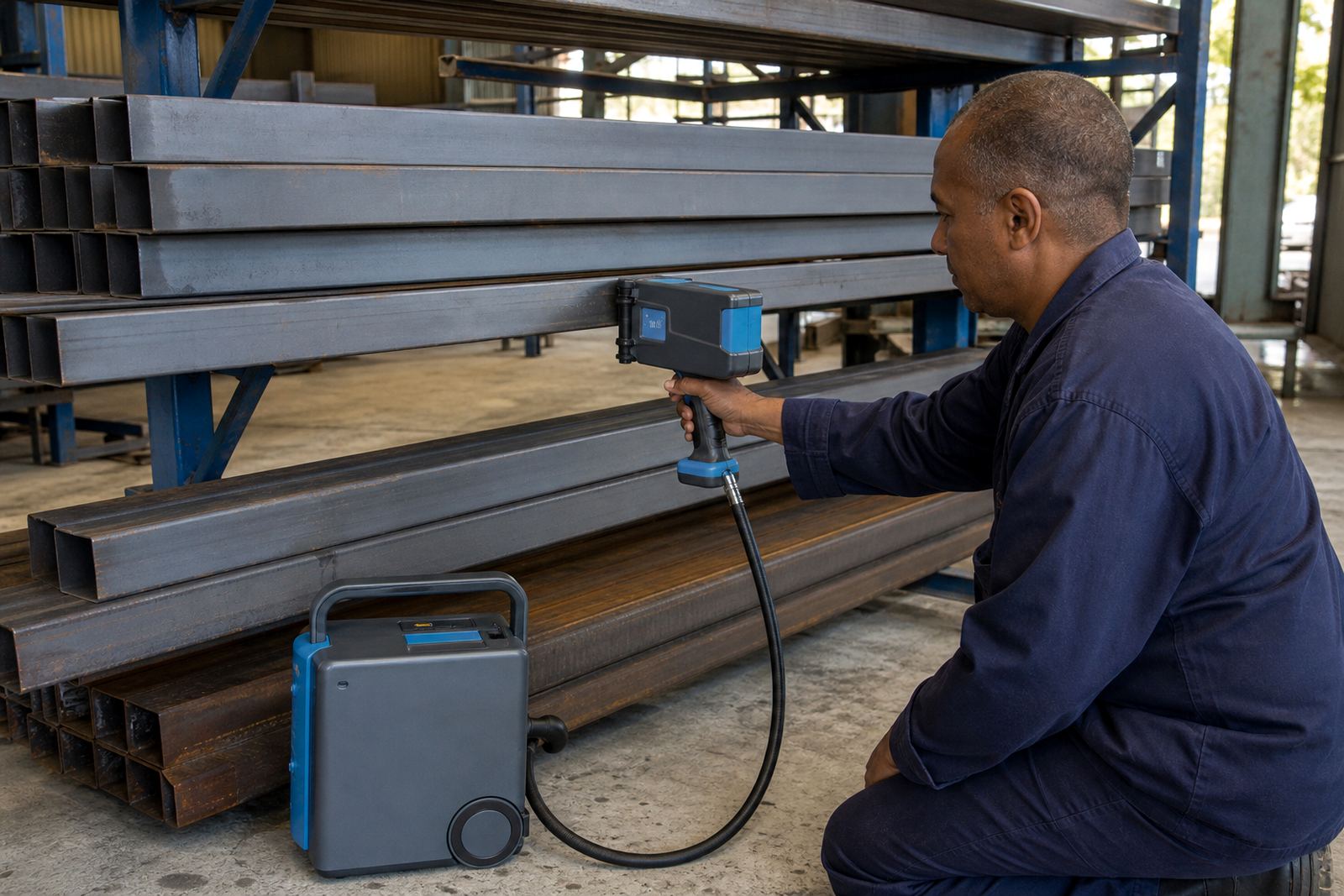
Handheld inkjet printers suit this kind of work because they can mark directly onto flat or slightly curved surfaces, including primer-coated steel, painted sections, shrink wrap and some treated timber used with steel packs. A clear code can help the team identify stock during offloading, stock counts and site sorting, especially where multiple sizes move through the same yard.
For steel stock marking, the real question is often where the mark must sit, how much room is available and whether the surface has dust, oil or moisture on it. That is where print height, ink choice and operator positioning matter.
Printer set-ups that suit coated metal work
The usual set-up for this use case is a handheld inkjet coder with a quick-dry ink, a cartridge suited to the surface and a simple message layout loaded before the job starts. Print height is normally chosen to match the space on the beam, tube, flat bar or plate edge, with smaller text for tight labels and larger text where the code must be seen from a distance.
Some yards only need a basic date and batch line. Others need a logo, a barcode or a longer handling message. The equipment can be set up for single-line coding or stacked lines, depending on the surface and the amount of information. For coated steel, quick-dry solvent ink is often used where the surface is smooth and handling starts soon after marking. Water-based ink can work on more absorbent materials nearby, but it is not the first choice for most steel faces.
- Single-line date and batch coding for bundle ends
- Two-line marks for part number plus handling note
- Barcode setup for warehouse scanning and dispatch control
- Logo printing for outward-facing stock or contract work
- Test prints on scrap steel or offcuts before production starts
Layout planning on real steel stock
Good layout keeps the code visible without putting it where straps, clamps or cutting work will remove it. On beams and sections, the side face is often better than the top edge. On pipes, the cleaner arc is usually easier to read than the shadowed underside. Painted steel can take a neat mark if the coating is fully dry and the surface is wiped down, but oily residue and mill dust will spoil the finish.
Before a run begins, the team should agree on the message order, print size and marking position. That matters when different lengths are moving through the same bay. A short reference such as job number, heat number or stack code may be enough for internal stock, while customer-facing packs may also need a logo or delivery identifier. Where the yard handles mixed materials, it helps to keep a small set of saved messages ready for repeat work.
Outdoor storage near Durban, Richards Bay or any coastal site can add humidity and surface condensation, so the marking plan should allow for drier handling windows and cleaner stock faces. In Johannesburg or inland yards, dust and abrasion tend to be the bigger problem. The printer can work in both settings, but the prep around it needs to match the yard conditions.
Common mistakes that waste stock and time
The most common trouble comes from trying to print over dirt, moisture or fresh coating. Another issue is setting a message too small for how far away the stock will be inspected. Once a bundle is strapped and loaded, tiny text becomes hard to read and easy to miss.
Another issue is leaving the ink choice until after the steel is already staged. If the surface is smooth and handled quickly, the wrong ink can smear. Where steel is rough or slightly textured, print can look uneven unless we set the height and pressure correctly. It also helps to check whether the barcode needs scanning in the yard or only at receiving, because that affects the size and spacing.
- Marking on damp or oily steel
- Printing too close to straps, corners or weld areas
- Using a message that is too long for the available face
- Skipping a test print on the actual surface
- Ignoring how the stock will be lifted or stacked after marking
Hire terms that fit steel stock work
Weekly hire works well for short production runs, shut periods and one-off dispatch work. Monthly hire suits yards that mark steel every day and want a printer available for ongoing stock control, contract work or seasonal volume. The rental can include delivery and collection, on-site setup, remote setup help, operator training, message loading and consumables supply, depending on what the yard needs.
For steel marking, backup unit support can be useful when one printer is shared across more than one bay or shift. Troubleshooting support also matters when a code needs to change during the day, or when a barcode has to be adjusted for a new stock run. If the team already has a process in place, a setup technician can still help with test printing and the first message layout so the job starts cleanly.
Branches and hire cover in Pinetown, Durban, Westmead, New Germany, Pietermaritzburg, Johannesburg, Cape Town and Richards Bay make it easier to match the rental to where the stock is handled. That matters when steel is moving between a fabrication shop, a storage yard and a dispatch point in different towns.
What the cost usually looks like in Rand
For steel stock marking, the hire cost normally depends on the printer model, the ink type, the message setup and how long the equipment is needed. Short weekly hire is usually suited to a single order run, while monthly hire suits repeat stock coding and regular dispatch work. Consumables are often priced separately when special inks or extra cartridges are needed for the chosen surface.
Short steel-marking hires usually come in at a few thousand Rand, climbing as barcode setup, logo loading, extra training or a backup coder get added. Bigger runs, longer hire terms and more demanding surface conditions can change the total. The cleanest way to plan the spend is to match the printer, ink and job length to the actual steel stock flow rather than guessing from a generic use case.
For a quick quote, it helps to note the surface type, the code content, the print size and the town where the steel is being handled. That gives a clearer picture of the rental and the consumables needed for the job.